
Electric Fencing Installation for Businesses in South Africa
CCTV Security Surveillance designs and installs SANS 10222 compliant electric fencing for businesses, farms and estates across South Africa. Our electric fencing solutions combine a physical barrier, a psychological deterrent and a security alarm system in one — tampering with the fence triggers an immediate alert, which can be integrated with your CCTV cameras and offsite monitoring control room. Trusted by South African businesses since 1967.
The Risk of an Unprotected Perimeter
- !Walls, palisades and conventional fencing can be climbed or cut without triggering any alert
- !Perimeter breaches often go unnoticed until an intruder is already on the property
- !Non-compliant or poorly installed fences can be a safety liability rather than a deterrent
- !Farms and large properties can't rely on physical barriers alone to protect livestock, crops and boundaries
- !A silent perimeter gives security teams and armed response no early warning to act on
What Professional Electric Fencing Delivers
- ✓A physical barrier, psychological deterrent and security alarm system combined in one installation
- ✓Instant tamper alerts logged on the fence energiser, with siren, strobe and control-room notification
- ✓SANS 10222 compliant design, signage and installation for legal, non-lethal protection
- ✓Solutions for agriculture, wildlife management and high-security perimeters alike
- ✓Seamless integration with CCTV, access control and offsite monitoring
What Is Electric Fencing?
Electric fencing is a form of access control — a barrier that uses electricity to deliver a short, sharp shock when touched. It is a deterrent to animals or people crossing a boundary or entering a place of danger, using a carefully controlled voltage designed to cause discomfort, not injury.
Early fence energisers used a transformer and a mechanically driven switch to create a pulse, and the voltage was unpredictable, with no-load peaks in excess of 10,000 volts and rapid voltage drops as fence leakage increased. Modern energisers use solid-state circuitry to emit controlled, timed pulses of high voltage, and are typically hooked up to a permanent electrical circuit backed by battery or solar power for uninterrupted protection, even during load shedding.
SANS 10222 Compliance & Safety Standards
Electric fencing in South Africa must comply with SANS 10222-3, the national standard governing the design, installation, testing and signage of electric fence security systems, alongside SANS 10142 for the electrical wiring involved. Compliance protects you legally and ensures the fence functions as a non-lethal deterrent rather than a hazard.
- ✓Certified installation — every system is installed to meet SANS 10222-3 requirements
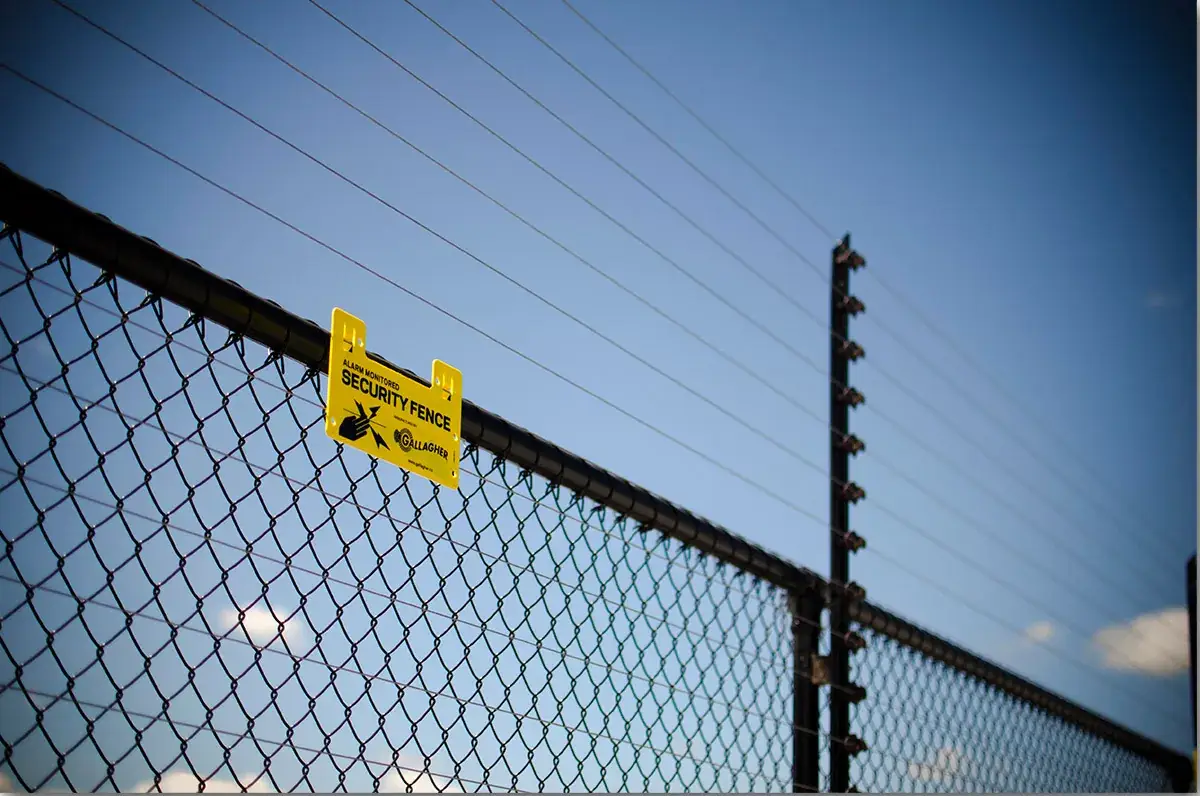
- ✓Compliant warning signage — clearly visible "Electric Fence" signage with the required lightning bolt symbol, spaced correctly along the perimeter
- ✓Non-lethal voltage control — energisers tested and set within legally permitted voltage and pulse-width limits
- ✓Documented compliance — certificates of compliance available for insurance, sectional title and estate requirements
Types of Electric Fencing We Install
We install and maintain the full range of electric fencing configurations, matched to your property, budget and security requirements.
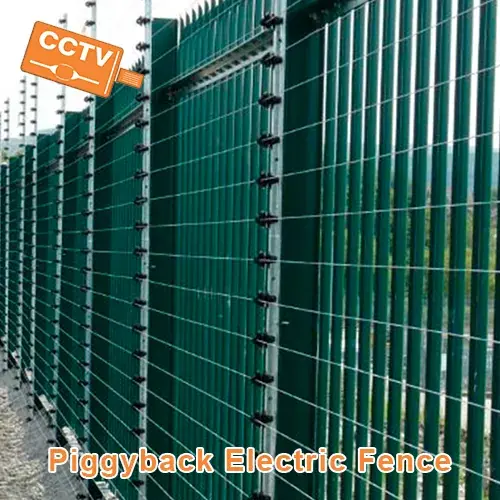
Piggy Back Fencing
Mounted onto the existing posts or pillars of a palisade or mesh fence using rivets or screws, adding an extra layer of electrified security to a barrier you already have.
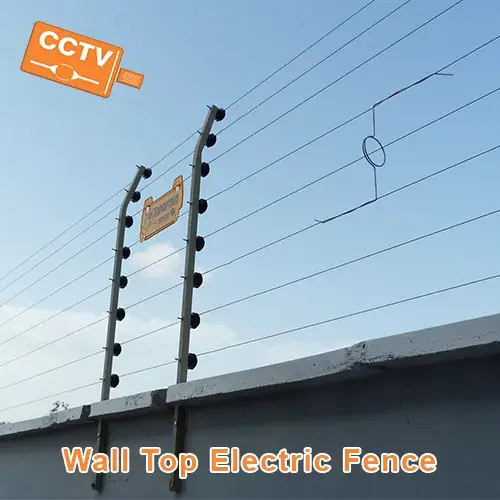
Wall-Top Electric Fencing
Mounted on top of an existing boundary wall, at a minimum height of 1.5m, to prevent climbing while preserving the wall's existing structure.
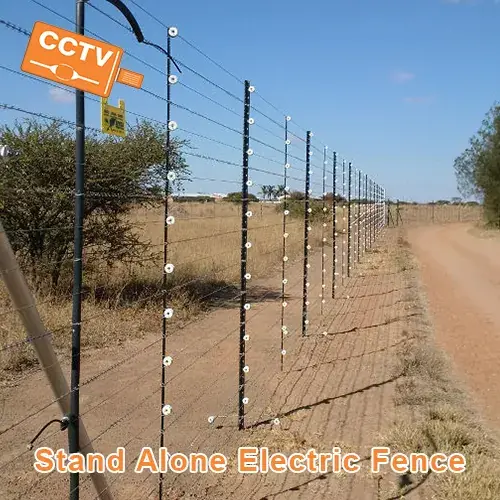
Stand-Alone Electric Fencing
A free-standing fence that works as the sole perimeter barrier, positioned at least 1m from the nearest structure — the preferred solution for high-security sites.
Fence Energisers & Monitoring
Solid-state energisers with solar or battery backup deliver controlled pulses and log every tamper event, triggering a siren, strobe and control room or mobile notification.
Electric Fencing Applications
Residential & Estate Security
Wall-top and piggy-back electric fencing for complexes, offices and gated estates, adding a monitored deterrent to existing perimeter walls.
Commercial & Industrial Perimeters
Stand-alone and high-security fencing for warehouses, factories and commercial sites, integrated with CCTV and access control for a complete perimeter solution.
Agricultural & Farm Fencing
Faster and cheaper to erect than conventional fencing, with a lower risk of animal injury than barbed wire, and tamper alerts that flag exactly which zone needs attention.
Wildlife & Game Fencing
Controls the movement of wild animals — keeping game off airport runways, out of crops, or deterring animals such as elephants from private property.
Electric Fencing Integrated with CCTV & Alarms
On its own, an electric fence is a strong physical and psychological deterrent. Integrated with CCTV cameras, access control and an offsite monitoring control room, it becomes part of a complete, verified security system — a fence tamper event can automatically trigger camera verification and an operator response, rather than relying on a siren alone. Read more in Electric Fencing and CCTV Integration.
Industries We Serve
Agricultural
Challenge: Protecting large perimeters and containing livestock cost-effectively
Outcome: Electric fencing = cost-effective perimeter without barbed wire, easy to move/reconfigure
Industrial/Manufacturing
Challenge: Securing large outdoor yards and loading areas from theft and unauthorized access
Outcome: Active deterrence + monitoring = 80% reduction in breach attempts, documented audit trail
Estates
Challenge: Securing large commercial estates and property management operations without operational disruption
Outcome: Discreet but effective perimeter deterrence = resident confidence + breach prevention
Mining
Challenge: Securing remote perimeters across vast mining operations from theft and unauthorized entry
Outcome: Ruggedised electric fence + AI detection = perimeter deterrence across kilometers
Implementation Process
Perimeter Assessment (Week 1)
Measure perimeter, identify installation type (piggy-back, wall-top, stand-alone), check power availability
Design & Permits (Week 2)
Design layout, obtain any necessary permits, plan integration with CCTV and monitoring systems
Installation (Weeks 3-4)
Install fencing hardware, wire runs, power supply, alarm triggers, and integrate with monitoring center
Testing & Monitoring Handoff (Week 5)
Full system test, staff training, live monitoring begins, breach alerts flow to offsite monitoring
Why Trust CCTV Security Surveillance
- ■Pulse-based technology: modern, non-lethal effective deterrent
- ■Integrated monitoring: fence breaches trigger real-time offsite response
- ■Customizable installation: works with existing infrastructure
- ■Compliant design: meets legal and insurance requirements for passive perimeter deterrence
- ■Integration with CCTV: documented evidence for every breach attempt
Related reading on Electric Fencing
- Electric Fencing and CCTV IntegrationHow combining electric fencing with CCTV creates a stronger, verified perimeter security system.
- Harnessing IoT: Revolutionizing Security Systems Through Integration and AutomationHow IoT-enabled fence energisers add real-time monitoring, alerts and remote diagnostics.
- Access Control SystemsElectric fencing is one part of a complete access control strategy — see the full range of solutions.
- CCTV for Agriculture and FarmsHow CCTV and electric fencing work together to protect farm boundaries, livestock and equipment.
- CCTV for Estates and CommunitiesPerimeter security solutions, including electric fencing, for gated estates and residential communities.
Electric Fencing for all industries
Electric Fencing is applicable across all business sectors:
Electric Fencing across South Africa
We provide electric fencing services in all major South African markets:
54 locations · swipe or use the arrows to see more
Electric Fencing FAQ
Select a category below to browse answers about electric fencing in South Africa
Choose a category above to view answers.
Electric fencing is a form of access control — a barrier that uses electricity to deliver a short, controlled shock when touched. It deters animals or people from crossing a boundary or entering a place of danger, functioning as a physical barrier, a psychological deterrent and a security alarm system in one.
Piggy back fencing is mounted onto an existing palisade or mesh fence to add an extra layer of security. Wall-top fencing is mounted on top of an existing boundary wall, at a minimum height of 1.5m. Stand-alone fencing is a free-standing fence that works as the sole perimeter barrier, positioned at least 1m from the nearest structure, and is typically used for high-security sites.
Yes. Electric fencing is popular in agricultural areas because it's cheaper and faster to erect than conventional fencing, doesn't restrain animals, and carries a lower risk of injury than barbed wire, while tamper alerts flag exactly which zone needs attention.
Yes. Electric fencing is widely used to control the movement of wild animals — for example keeping animals off airport runways, out of crops, or deterring animals such as elephants from private property.
We offer three installation types: Piggy Back fencing (mounted on existing posts with rivets or screws), Wall Top fencing (installed on walls, minimum 1.5m height), and Stand Alone fencing (free-standing with 1m clearance from other structures). Each suits different property configurations.
Modern systems use pulse-based technology (replacing outdated mechanical switches) powered via permanent electrical circuits, batteries, or solar panels. When breached, the fence triggers an alarm notification system linked to your security monitoring.
Agricultural use (economical, quick to install, lower animal injury risk vs. barbed wire). Wildlife management (protects airport runways, crop areas from wild animals). Security operations (non-lethal perimeter system with integrated alarm, strobe alerts, and control-room notifications).
Yes. Fence breaches trigger alarms linked to our 24/7 offsite monitoring, strobe lighting, and optional control-room notification. The system integrates with CCTV, access control, and alarm panels for unified security response.
Yes, provided it complies with SANS 10222-3, the national standard governing the design, installation, testing and signage of electric fence security systems, alongside SANS 10142 for electrical wiring. Compliant fences are designed to be non-lethal, causing discomfort rather than injury.
No. Security electric fences are designed and regulated to be non-lethal. Modern energisers emit controlled, timed voltage pulses set within legally permitted limits, designed to cause discomfort and act as a deterrent, not to cause serious harm.
Yes. Tampering with the fence sets off an alarm logged on the fence energiser, which can trigger a siren, strobe, and notification to a control room or directly to the owner, and can be integrated with [CCTV cameras](/services/cctv-systems/), access control and [offsite monitoring](/services/offsite-monitoring/) for verified, real-time response.
Yes. Fence energisers are typically hooked up to a permanent electrical circuit backed by battery or solar power, so the fence and its alarm functions continue to operate during power outages.
Cost depends on the perimeter length, fencing type (piggy back, wall-top or stand-alone), energiser specification and any integration with CCTV or alarms. A free on-site assessment gives an accurate, tailored quote for your electric fencing installation.
Yes. CCTV Security Surveillance has branches in Gauteng, KwaZulu-Natal, Western Cape and Eastern Cape and installs and maintains SANS-compliant electric fencing for businesses, farms and estates across all nine provinces of South Africa.