Security designed for your industry's risks
Since 1967 we have deployed 50,000+ cameras across virtually every sector of the South African economy. Every solution starts with the specific threats, compliance requirements and operational goals of your industry.
- 59+
- Years protecting SA business
- 7,000+
- Commercial & industrial clients since 1967
- 50,000+
- Cameras deployed
- 9
- Provinces serviced from 4 branches
Retail
Shrinkage reduction, AI shoplift detection and POS-linked investigations
View solutions →Logistics & Warehousing
Perimeter AI, forklift safety and full chain-of-custody coverage
View solutions →Mining
SHEQ-compliant surveillance for plants, pits and processing areas
View solutions →Manufacturing
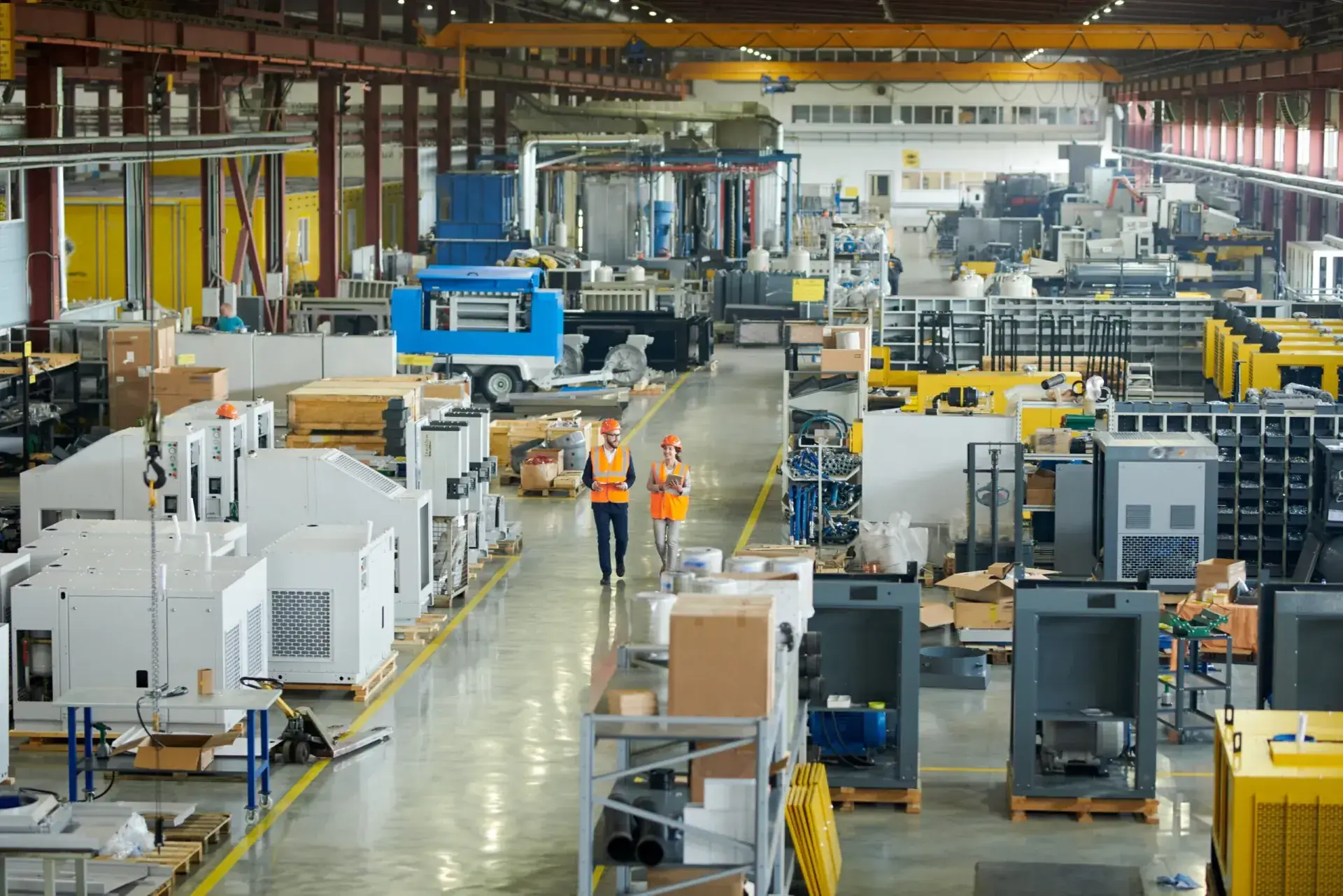
Production visibility, PPE compliance and perimeter protection
View solutions →Estates
Perimeter AI, LPR at gates and 24/7 offsite monitoring
View solutions →Healthcare & Hospitals
Patient and staff safety with POPIA-aligned surveillance
View solutions →Education & Schools
Safe campuses with monitored perimeters and access control
View solutions →Hospitality
Guest safety and loss prevention for hotels and venues
View solutions →Banking & Finance
High-compliance surveillance for branches and cash environments
View solutions →Farms & Agriculture
Long-range perimeter AI and off-grid surveillance for farms
View solutions →Commercial Offices
Access control, visitor management and after-hours monitoring
View solutions →Frequently Asked Questions
Select a category below to browse answers about security for your industry
Choose a category above to view answers.
CCTV (Closed Circuit Television) is the monitoring and recording of people, processes or property through the use of a camera and other related electronic security systems. This form of visual security can be sub-divided into analogue and IP (Internet Protocol) solutions.
Cut down on losses due to theft Increase employee productivity Increase customer and employee safety Provide 24/7 access to your system Reduce the need for manual security (security guards)
A basic CCTV system is made up of a CCTV camera, a video transmission system that sends video signals from the camera to a recording system such as a digital video recorder (DVR) which in turn sends the image to a monitor for display for viewing of playback purposes.
CCTV cameras use the analogue method to record images on tapes. So it is required to frequently change the videotapes and the resolution of the recorded images is of very bad quality. On the contrary, a DVR (Digital Video Recorder) processes video images as a digital method, therefore, enabling recording for a long time without the replacement of videotapes and providing clear images in high resolution without degradation of image qualities even though the video footage played several times. In addition, DVR has real-time image transmission and remote control functions on the Internet. It is evaluated as the most appropriate video monitoring system for any company that has been integrated by the network.
IP CCTV cameras are similar to analogue CCTV cameras in features and functions but offer far superior picture quality. They do not transmit their images and sounds as analogue signals but as data. They also offer remote configuration of their settings, and on some models, even the image sensor of the camera can be configured as required. IP CCTV cameras incorporate built-in web servers which allow for live monitoring, recording and configuration across a computer network or the internet.
An IP security camera image broadcasts the video images as a digitized signal over a LAN line (Local Area Network) where it's then transmitted to a computer or server. Each camera is connected to the network via a transmitter/receiver unit that converts the analogue signal into DVD quality MPEG-4 or H.264 digital video for transmission over the network infrastructure. Depending upon the software used to manage the digital images, it can record, display or retransmit the images to anywhere in the world. The software package can allow for analyzing data and selecting specific flagged items to watch out for. True IP-based digital surveillance uses CCD cameras that use signal processing that sends packetized video streams over the LAN through a Cat 5/Cat 6 cable rather than a coax cable network, utilizing greater bandwidth and standard TCP/IP communication. If security is an issue, full digital surveillance also offers the added advantage of data encryption opportunities to protect against image tampering.
IP-based network video solutions include equipment such as network cameras (IP cameras), network video recorders (NVR's), video encoders/decoders and relevant alarm and monitoring software.
Access control is the control and management of people, vehicles and goods to and from access points.
Code Based access systems A secure pin code entered onto a touch pad/screen is required, before Access to a controlled area is allowed. Proximity access control Proximity access control systems use cards/tags and readers to operate the access control. Proximity cards come in a variety of sizes but most modern systems use a card the same size and thickness as a credit card. Proximity tags can be clipped to key rings and can provide a more convenient and robust method of operating the access control reader. Bio-metric The newest technology in access control, bio-metric systems use the body's unique characteristics such as the retina, fingerprints or palm prints to determine authorized access through the use of fingerprint readers etc Access Control Systems can also be integrated with Time and Attendance systems and job costing systems to give administrators or management full control of their facility. Bio-metric time & attendance system requires staff to scan their fingerprint when they clock on or off, eliminating the risk of buddy punching and improving decision making by delivering real time information on staff activity.
Access Control requires four basic technologies for effective functioning. These consist of: A PC (personal computer) for overall system control. input devices - devices that detect conditions or events (not specifically connected to a door) e.g. temperature monitors, motion detectors, panic buttons and glass break detectors) Access Control doors and related peripherals, including door contact switches, card readers and keypads, and locking devices output devices - items that respond to the input devices
Don't see your industry?
After nearly six decades, chances are we've secured a site like yours.