Solar CCTV, UPS and Inverter Backup for Security Systems in South Africa
A security system that goes dark during load shedding isn't a security system. CCTV Security Surveillance designs and installs inverter, UPS and solar backup power for CCTV cameras, access control, electric gates and boom gates, keeping your surveillance and entry management running through outages, ageing grid infrastructure and Stage 4-plus load shedding. From a UPS for CCTV recorders and standalone inverters to solar CCTV and full hybrid systems, we size a backup solution to your site and your risk. Trusted by South African businesses since 1967.
The Risk of Grid-Dependent Security
- !Load shedding remains a material risk for any security system that relies solely on grid power
- !A camera or NVR that goes dark during an outage isn't recording exactly when risk is highest
- !Electric gates, boom gates and card readers can fail open or fail closed without backup power
- !Remote sites, farms and construction sites often have no reliable grid connection at all
- !Ageing infrastructure and rising energy demand make grid-only reliability increasingly risky
What Solar & Inverter Backup Delivers
- ✓Continuous CCTV recording and monitoring through outages, day or night
- ✓Access control, gates and boom gates that keep operating when the grid doesn't
- ✓Standalone solar CCTV cameras for sites with no electrical infrastructure at all
- ✓Reduced dependence on an unreliable national grid, with a system sized to your risk
- ✓A cleaner, more sustainable power source alongside genuine security resilience
Why Backup Power Matters for Security Systems
South Africa's persistent electricity challenges, from load shedding to ageing infrastructure and maintenance issues, make a reliable power source for your security systems essential, not optional. Businesses that harness inverter and solar power stay one step ahead in safeguarding their assets, eliminating the vulnerability window that opens every time the grid goes down.
By integrating solar power systems with your CCTV and security systems, you get uninterrupted operation during outages and a cleaner, more sustainable power source, reducing your reliance on the national grid and your carbon footprint at the same time.
Powering CCTV Systems
Power is integrated directly into your security system, ensuring a continuous supply and unwavering surveillance even during power outages. Whether it's a full inverter setup for an existing camera network or a standalone solar CCTV camera for a site with no infrastructure at all, your cameras keep recording exactly when they're needed most.
Powering Access Control Systems
Our solar and inverter solutions extend beyond CCTV to power access control systems — electric gates, boom gates, card readers and biometric readers. Manage and monitor entry and exit points effectively, with enhanced security and access management, even during electricity shortages. This is especially important for electric fencing and gate installations, which depend on a live energiser circuit to function as a deterrent.
Solar & Backup Power Options
We design the right backup power configuration for your site, budget and risk profile.
Solar Panels
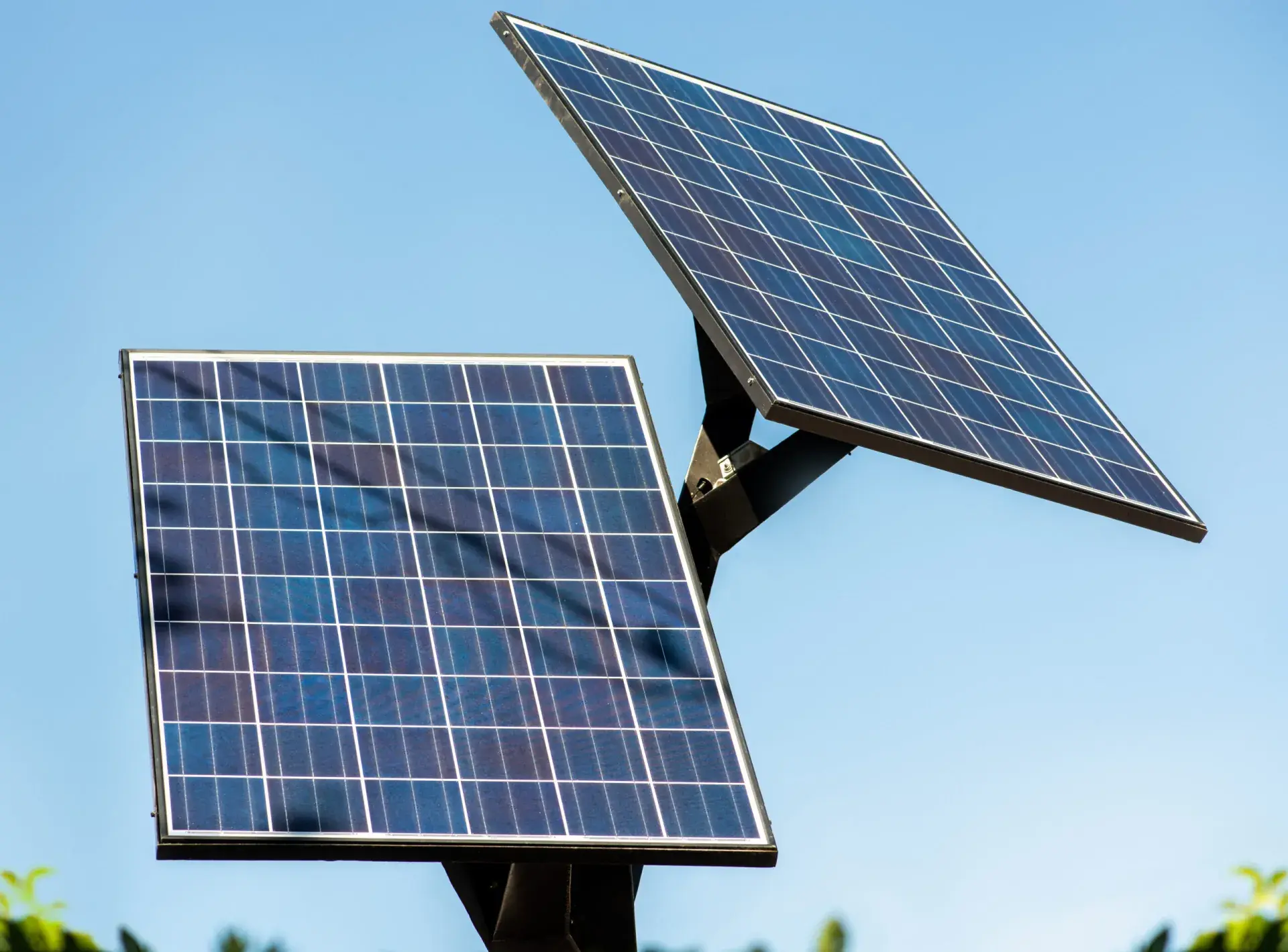
Installed on rooftops or open areas, solar panels convert sunlight into usable electrical power for your security systems and CCTV cameras, with excess energy stored in batteries or used directly.
Battery Backup Systems
Integrated with solar panels to ensure a continuous supply even without sunlight — excess daytime energy is stored and used at night or during an outage.
Hybrid Solar Systems
Combines solar energy with a grid connection, so you benefit from solar power while still having grid access as a backup during extended low sunlight or peak demand.
Standalone Inverters
If solar panels aren't an option, an inverter can serve as a standalone backup system, guaranteeing uninterrupted power to your security equipment through outages.
Standalone Solar CCTV Cameras
Fully self-contained cameras that run entirely off-grid, connecting via GSM, WCDMA or 4G LTE, with battery backup providing up to seven days of operation without direct sunlight — ideal for construction sites, remote buildings and sites with no electrical wiring at all.
Solar UPS / Hybrid Inverter Systems
A modern hybrid power backup combining a high-efficiency solar inverter, a smart battery management system and a long-lasting LiFePO4 battery, for the most reliable and lowest-maintenance backup available.
Solar CCTV for Off-Grid Business Sites
Solar CCTV runs cameras from solar panels and batteries instead of mains electricity, and sends footage over mobile networks such as 4G LTE instead of network cables. It suits business sites where running power and data cables is impractical or too expensive, and sites where load-shedding would otherwise leave cameras dark. Read more in our guide to solar powered CCTV systems.
A solar system only works if it is planned for the site, so we check these points before specifying one:
- ✓Sunlight: whether the panel position gets full sun for most of the day, all year, with the panel and battery sized for winter rather than the sunniest months
- ✓Battery autonomy: how many days each unit must run without direct sun
- ✓Mobile signal: signal strength at each exact camera position, because weak coverage limits live viewing and remote access
- ✓Data: how much footage will be uploaded each month
- ✓Theft and vandalism: mounting panels and cameras high and securely enough to deter them
- ✓Maintenance: keeping panels clean, especially on dusty farms and construction sites
Choosing the Right Battery: Lithium (LiFePO4) vs. Lead-Acid
Battery chemistry has a major impact on how reliable and low-maintenance your backup system is. LiFePO4 (lithium iron phosphate) batteries have become the standard for new solar and inverter installations because they handle deep discharges for far longer, last thousands more charge cycles, and require hardly any maintenance compared to older lead-acid batteries. Battery and inverter compatibility also matters — a properly matched system allows the inverter and the battery's management system to communicate correctly, protecting your investment and extending system life.
Sizing Your Backup System
There's no single "correct" system size — the right configuration depends entirely on what you're powering, for how long, and how much sunlight your site gets. As a general guide, a small backup covering CCTV, a few access control devices and networking equipment typically needs a modest inverter paired with several kWh of battery storage, while a full site — including gates, lighting and multiple camera runs — needs a larger inverter and battery bank sized for extended runtime. We carry out a free on-site assessment of your actual power draw and load-shedding stage requirements before recommending a system size, rather than quoting a generic package.
Where Solar & Inverter Solutions Are Used
Remote & Off-Grid Sites
Standalone solar CCTV for sites with no electrical wiring or network infrastructure at all.
Farms & Agricultural Properties
Solar-powered surveillance and farm security across large boundaries with no reliable grid connection.
Construction Sites & Temporary Structures
Quick-deploy standalone solar cameras that don't need mechanical infrastructure or fixed wiring.
Estates & Residential Complexes
Backup power for gates, access control and perimeter cameras so security holds through load shedding.
Retail & Commercial Premises
Keeping CCTV, POS integration and access control running through business hours regardless of outages.
Industrial & Warehouse Sites
Larger hybrid systems sized to cover extensive camera runs, access control and perimeter equipment.
Solar CCTV Sites We Have Delivered
These case studies document installations completed by our own teams. Browse more in our case studies.
Sugar cane farm, North Coast (KZN)
6 solar-powered camera points and wireless links between buildings, covering the workshop, fuel store and main access roads. Read the case study.
Transport depot, Komani (Eastern Cape)
4 solar-powered camera points at a depot, covering the fleet yard, diesel bay and workshop alongside electric fencing. Read the case study.
Game lodge, Makhanda area (Eastern Cape)
5 solar-powered camera points and wireless links at a remote lodge, covering reception, stores, staff areas and the entrance gate. Read the case study.
Industries We Serve
Retail/Shopping Centers
Challenge: Maintaining security and access control during frequent load-shedding events without disrupting customer experience
Outcome: Solar + backup = continuous operation through load-shedding, zero downtime, 30% cost reduction
Banking/Financial
Challenge: Zero-downtime requirement for vault security and 24/7 monitoring during power events
Outcome: Solar + hybrid backup = guaranteed uptime for ATMs, access control, and monitoring regardless of grid status
Healthcare
Challenge: Patient safety depends on continuous security, access control, and monitoring - no exceptions
Outcome: Solar + battery backup = 24/7 hospital security operation independent of grid failures
Industrial/Manufacturing
Challenge: Production security and facility protection during shift changes when load-shedding often occurs
Outcome: Solar + hybrid system = uninterrupted access control and monitoring during load-shedding
Implementation Process
Power Audit (Week 1)
Calculate security system power consumption, analyze load-shedding patterns, assess solar sunlight hours
System Design (Week 2)
Size solar panels and battery capacity, design switchover logic, plan installation locations
Installation (Weeks 3-4)
Install solar panels, mount battery systems, wire switchover controls, integrate with existing security systems
Testing & Optimization (Week 5)
Test automatic switchover, validate 24/7 operation, tune load prioritization, go live with continuous monitoring
Why Trust CCTV Security Surveillance
- ■24/7 power resilience: solar by day + battery by night + generator backup if needed
- ■Automatic intelligent switchover: zero manual intervention, always optimal power source
- ■30-50% operating cost reduction through renewable energy generation
- ■Load-shedding immunity: security systems operate regardless of grid status
- ■Sustainability advantage: carbon-neutral, renewable-powered security
Related reading on Inverters & Solar Solutions
- Solar Powered CCTV SystemsHow standalone solar CCTV cameras work, and why they're ideal for remote or off-grid sites.
- CCTV Guide 2026: Choosing the Best CCTV Company in SAWhy load-shedding resilience should be part of any CCTV company comparison.
- CCTV SystemsThe camera and recording infrastructure that solar and inverter backup power protects.
- Access Control SystemsGates, boom gates and readers that depend on reliable backup power to keep functioning.
- Electric FencingWhy a live energiser circuit, and therefore backup power, is essential to electric fence security.
Inverters & Solar Solutions articles and guides
In-depth answers to the questions businesses ask about inverters & solar solutions.
1 article · swipe or use the arrows to see more
Inverters & Solar Solutions for all industries
Inverters & Solar Solutions is applicable across all business sectors:
Inverters & Solar Solutions across South Africa
We provide inverters & solar solutions services in all major South African markets:
54 locations · swipe or use the arrows to see more
Inverters & Solar Solutions FAQ
Select a category below to browse answers about inverters & solar solutions in South Africa
Choose a category above to view answers.
Solar CCTV runs cameras from solar panels and batteries instead of mains electricity, usually sending footage over a mobile network such as 4G LTE. It needs no power or network cables, which makes it practical for farms, construction sites and remote buildings.
Power from an inverter or solar system is integrated directly into your security system, ensuring a continuous power supply so your CCTV cameras and NVR keep recording and streaming even during a power outage or load shedding stage.
Yes. Our solar and inverter solutions extend beyond CCTV to power [access control systems](/services/access-control/), including electric gates, boom gates and card readers, so you can manage and monitor entry and exit points even during electricity shortages.
If solar panels aren't an option, an inverter can serve as a standalone backup system, guaranteeing an uninterrupted power supply to your CCTV and security equipment through outages, without needing rooftop or open-area panel installation.
Solar panels convert sunlight into electrical power. Battery backup systems store energy for night-time operation. Hybrid systems combine renewable solar energy with grid backup. All keep CCTV cameras, access control, and monitoring systems online during load-shedding and outages.
Power outages are when security risk spikes highest - facilities go dark, alarms may fail, monitoring stops. Inverter and solar solutions ensure continuous operation of cameras, access control, and communication systems during the exact periods when threats increase.
UPS (Uninterruptible Power Supply) provides battery backup for immediate outages. Solar systems generate clean, renewable power during daylight. Hybrid systems combine battery backup with solar panels for 24/7 independence from grid power.
Yes. We design integrated systems with automatic switchover between solar, battery, generator, and grid power. This creates redundant resilience - if one power source fails, the system automatically switches to the next.
Yes. The battery stores surplus energy, so the camera keeps running at night and in cloudy weather. How long it can run without direct sun depends on the model and how the system is sized, so we size panels and batteries for winter.
Solar panels generate electricity directly from sunlight. Battery backup systems store excess solar energy so power is available at night or during outages. Hybrid solar systems combine solar generation with a grid connection, so you benefit from solar power while still having grid access as a backup during low sunlight or high demand periods.
Most standalone solar-powered CCTV cameras include a battery backup that can extend connectivity for up to seven full days without direct sunlight, storing unused daytime energy for use during cloud cover, rain or dust that blocks the panels.
LiFePO4 batteries handle deep discharges for far longer, last thousands more charge cycles, and require hardly any maintenance compared to older lead-acid batteries, making them the more reliable, lower-maintenance choice for security backup power, despite a higher upfront cost.
Yes. Standalone solar-powered CCTV systems are designed to connect using GSM, WCDMA or 4G LTE mobile networks, so cameras can be deployed with a quick, wireless setup at sites with no electrical or network cabling at all.
The right system size depends on what you're powering, for how long, and your site's sunlight exposure. There is no universal "best" size — we carry out a free on-site assessment of your actual power draw and load-shedding requirements before recommending a system, rather than quoting a generic package.
Cost depends on whether you need a standalone inverter, a battery backup system, a hybrid solar system, or standalone solar cameras, and on the size of the system required for your load. A free on-site assessment gives an accurate, tailored quote.
Yes. CCTV Security Surveillance has branches in Gauteng, KwaZulu-Natal, Western Cape and Eastern Cape and designs, installs and supports inverter and solar backup power for security systems across all nine provinces of South Africa.
Cost depends on the number of cameras, the panel and battery size each position needs, mobile data use and how the units are mounted and protected. A free on-site assessment gives an accurate, tailored quote.