CCTV for Logistics and Warehousing: A Camera Guide for South African Warehouses
Which CCTV cameras belong where on a warehouse or distribution centre, what each one needs to see, and how AI, licence plate recognition and 24/7 monitoring turn footage into prevention.
In This Guide
- Why logistics sites need specialised CCTV
- Start with a site risk map
- The warehouse CCTV camera guide
- Perimeter and yard
- Gates and weighbridges
- Loading docks
- Aisles, racking and the warehouse floor
- High-value stock, cold rooms and staff areas
- Choosing the right resolution
- AI analytics and offsite monitoring
- Recording, storage, power and POPIA
- Choosing a CCTV provider for your warehouse
- Warehouse CCTV FAQs
CCTV for logistics and warehousing has one job that a standard office system never faces: protecting high-value stock that is constantly moving, across a site that often runs day and night. Trucks arrive and leave every hour, pallets change hands at the dock, and the gaps between those handovers are exactly where losses happen.
This guide explains which CCTV cameras belong where in a warehouse or distribution centre, what each one needs to see, and how AI video analytics, licence plate recognition and offsite monitoring turn recorded footage into prevention. It is written for warehouse managers, logistics operators and facilities teams in South Africa who are planning a new system or upgrading an old one.
Key Takeaways
- Plan by zone, not by camera count. Perimeter, gates, yard, docks, aisles and high-value stock each need a different camera.
- Match the camera to the task. Detecting a person on a fence line, reading a number plate and identifying a face at a dock door need very different pixel densities.
- Watch the handovers. Gates, weighbridges and loading docks are where stock changes hands, so they deserve the best coverage.
- Use AI and monitoring for prevention. Analytics and a 24/7 control room react while an incident is happening, not after the fact.
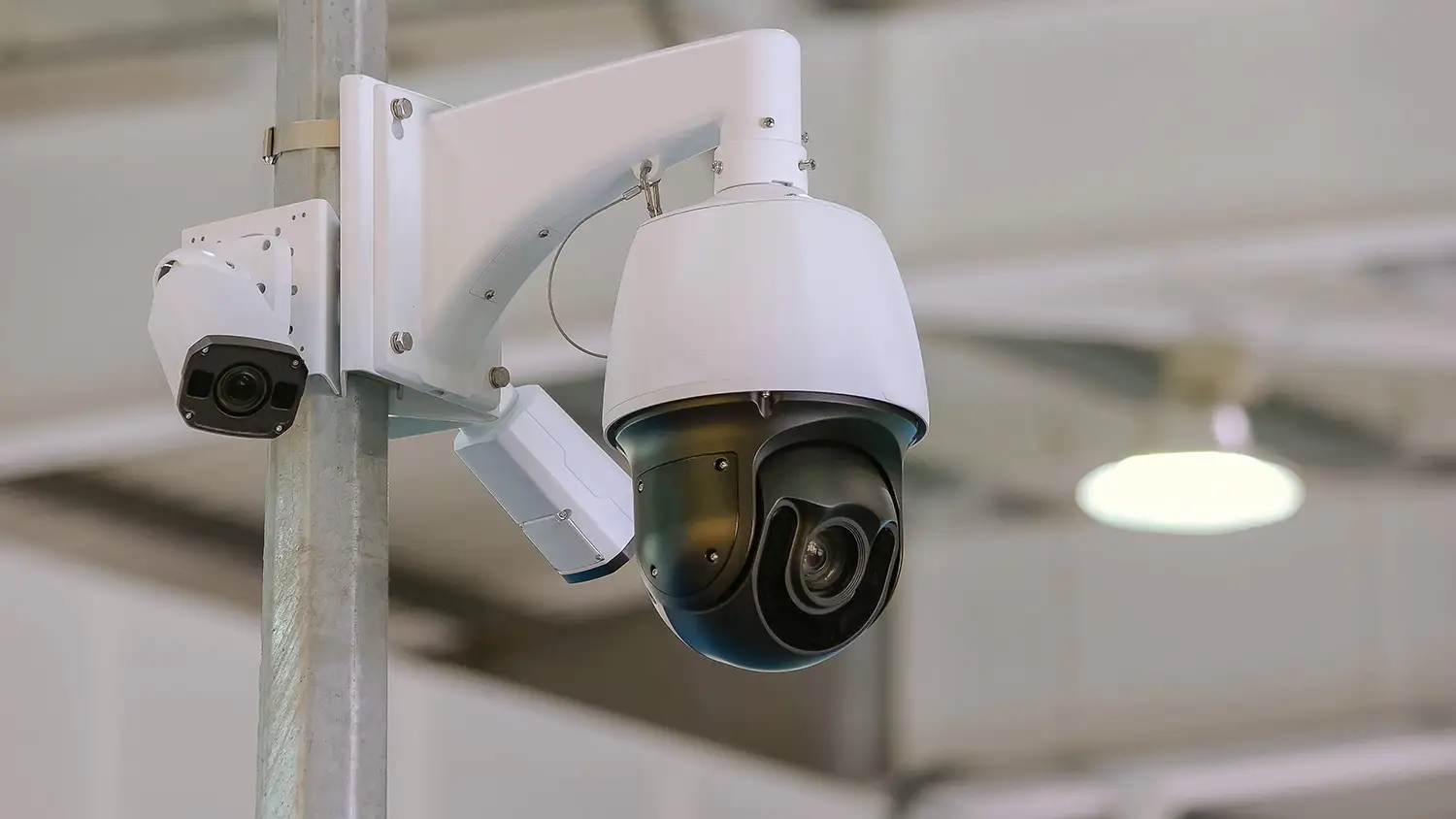
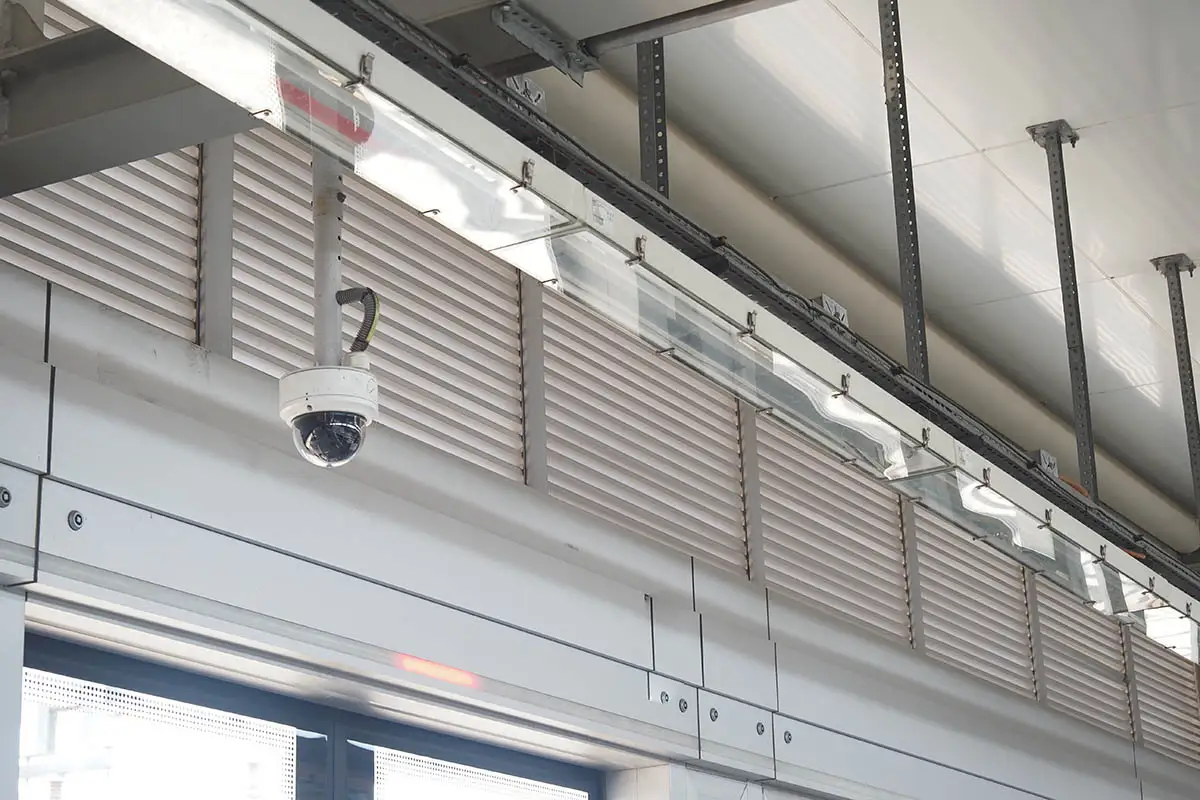
Warehouse CCTV In Pictures
Want CCTV designed for your warehouse?
We design every logistics CCTV system around your site's zones, risks and operations, starting with a free on-site assessment.
Request a Free Site Assessment Call 0861 002 2881. Why Logistics Sites Need Specialised CCTV
Logistics and warehousing sites combine almost every security risk in one place: large perimeters, valuable and easily resold stock, vehicles and drivers from many outside companies, shift changes, and long periods where parts of the site are quiet. Losses rarely come from one dramatic break-in. More often they come from:
- Theft at the dock, where short-loaded or over-loaded trucks leave with stock that was never recorded.
- Insider theft, from stock hidden in the warehouse to collusion between staff and drivers.
- Perimeter breaches at night or over weekends, especially on large yards with limited lighting.
- Vehicle and cargo theft from yards, including trailers and loaded vehicles waiting for dispatch.
- Disputes and claims, where footage is the only evidence of the condition of goods at handover.
A generic "cameras on every corner" layout misses most of these. Effective warehouse CCTV is designed around how goods and people actually move through the site.
2. Start With a Site Risk Map
Before choosing cameras, map the site into zones and decide what you need to achieve in each one. For every zone, ask three questions:
- What could go wrong here? Intrusion, theft, damage, a safety incident or a dispute.
- What do we need to see? That something is happening, what it is, or exactly who or which vehicle is involved.
- What should happen next? Record it for evidence, alert a supervisor, or trigger a response from a control room.
The answers decide the camera type, the resolution, the lighting and whether the zone needs AI analytics or live monitoring. This is also why a professional site assessment matters more than a quote based on a camera count.
Perimeter & Yard
Detect people and vehicles crossing the line, day and night.
Gates & Weighbridge
Read every plate and link each vehicle to its recorded weight.
Loading Docks
See into bright trailers and identify who handles the goods.
Aisles & Floor
Cover long aisles and forklift traffic without wasted pixels.
High-Value Stock
Identify people and read labels at the point of highest risk.
Cold Rooms
Freezer-rated cameras that keep working at sub-zero temperatures.
3. The Warehouse CCTV Camera Guide: Which Camera Goes Where
The table below summarises a typical layout for a South African warehouse or distribution centre. Every site is different, but these zones and camera choices apply to most.
| Zone | Recommended camera | What it needs to achieve |
|---|---|---|
| Perimeter fence and yard | AI bullet or thermal cameras with perimeter analytics | Detect people and vehicles crossing the line, day and night |
| Entry and exit gates | LPR/ANPR cameras plus an overview camera | Read every number plate and record the vehicle and driver |
| Weighbridge | LPR camera with a video data overlay | Link the vehicle, time and recorded weight in one clip |
| Truck yard and parking | PTZ or high-resolution panoramic cameras | Follow vehicles and trailers across open areas |
| Loading docks | Wide dynamic range (WDR) cameras, one per dock door | See into bright trailers and identify people handling goods |
| Aisles and racking | Corridor-mode cameras mounted high | Cover long, narrow aisles without wasted pixels |
| Open floor, picking and packing | Fisheye (360°) or multi-sensor cameras | Wide overview of movement and forklift traffic |
| High-value cage and dispatch | 4K cameras at identification distance | Identify people and read labels at the point of risk |
| Staff entrances and turnstiles | Face-capture cameras linked to access control | Record who entered, when, and match it to access events |
| Cold rooms and freezers | Freezer-rated cameras with heated housings | Reliable images at sub-zero temperatures without fogging |
4. Perimeter and Yard: Stop Intrusions Before They Reach the Building
The perimeter is the first line of defence on most logistics sites. AI-enabled bullet cameras with line-crossing and intrusion detection can tell the difference between a person, a vehicle and an animal, so alerts are meaningful rather than constant. On long fence lines, or where lighting is poor, thermal cameras detect body heat in complete darkness, fog and smoke, over distances a standard camera cannot match.
For the strongest perimeter, combine cameras with electric fencing so an alarm on the fence is immediately verified on video. Our guide to electric fencing and CCTV integration covers how the two work together.
5. Gates and Weighbridges: Record Every Vehicle In and Out
The gate is where every legitimate truck, and every unauthorised one, passes. LPR/ANPR cameras read number plates automatically, log every entry and exit, and can flag blacklisted or unknown vehicles. A second overview camera captures the full vehicle and the driver's cab for context.
Where a weighbridge is in use, a video data overlay stamps the recorded weight onto the footage of the vehicle on the scale, which makes short-loading and weight disputes far easier to resolve. See our articles on licence plate recognition cameras and integrating weighbridges with CCTV video overlays.
Tie the Plate, the Weight and the Time Together
When the gate LPR log, the weighbridge reading and the dock camera footage share the same timestamps, one search shows a truck's full visit: when it arrived, what it weighed in and out, and what was loaded. That single timeline is what resolves most disputes quickly.
6. Loading Docks: The Highest-Risk Handover on Site
Loading docks are where goods change hands, and where most shrinkage in logistics happens. The challenge is lighting: a camera inside a dim warehouse looking into a bright open door will usually show a white glare where the trailer should be. Wide dynamic range (WDR) cameras balance the bright and dark areas so you can see both the goods and the people handling them.
Best practice is one camera per dock door, positioned to see into the trailer, the pallets being moved and the faces of the people moving them, plus an overview camera for the dock apron outside. Recording the seal and the trailer doors at dispatch also gives you evidence for any claim about the condition or quantity of a load.
Lighting Makes or Breaks Dock Footage
Most unusable warehouse footage comes from the dock doors and the yard at night. Specify WDR at every dock, check each camera against real daytime and night-time conditions during commissioning, and add lighting where cameras alone cannot cope.
7. Aisles, Racking and the Warehouse Floor
Long, narrow aisles waste most of a standard camera's widescreen image on the racking. Corridor mode rotates the image to a tall 9:16 format, so the full length of the aisle fills the frame. Mount these cameras high and at the end of each main aisle.
For open floors, picking areas and packing stations, fisheye (360°) or multi-sensor cameras give a wide overview from a single mounting point, which is useful for following forklift movement and staff activity across the floor. AI analytics can also support safety, such as detecting people in forklift zones or PPE detection for helmets and high-visibility vests.
8. High-Value Stock, Cold Rooms and Staff Areas
Cages, high-value storage and dispatch counters need cameras at identification level, typically 4K, positioned close enough to recognise faces and read labels or documents. Staff entrances and turnstiles work best with cameras linked to access control, so every access event can be matched to video of the person who used the card or fingerprint.
Standard cameras struggle in freezers, where condensation, frost and low temperatures cause fogged lenses and failures. Cold rooms need freezer-rated cameras with heated, sealed housings. Our cold storage CCTV guide explains what to specify.
9. Choosing the Right Resolution: Detect, Observe, Recognise, Identify
Resolution on its own says little. What matters is pixel density: how many pixels cover each metre of the scene at the distance you care about. The international CCTV standard IEC 62676-4 sets out four levels, often called DORI:
- Detect: you can tell that a person or vehicle is present. Suitable for perimeter detection.
- Observe: you can see what someone is doing. Suitable for yard and floor overviews.
- Recognise: you can recognise a person you already know. Suitable for aisles and general areas.
- Identify: you can identify a stranger beyond reasonable doubt. Needed at docks, gates, dispatch and high-value areas.
A 4K camera covering a wide yard may only reach "detect" at the far fence, while a 2MP camera focused on a single dock door can reach "identify". Designing to these levels, rather than to a headline megapixel number, is what separates a system that produces usable evidence from one that does not.
10. AI Analytics and Offsite Monitoring: From Recording to Prevention
A warehouse can easily have dozens or hundreds of cameras, far more than anyone can watch live. AI video analytics solves this by watching every camera continuously and raising an alert only when something specific happens: a person in the yard after hours, a vehicle stopping on the perimeter road, loitering at a dock door, or movement in a closed area.
Those alerts are most valuable when someone acts on them immediately. With 24/7 offsite monitoring, trained operators in our control room verify each alert on live video and escalate to your armed response, site security or management while the incident is still happening. Learn more about video analytics and how AI CCTV works.
| Factor | Recording-only CCTV | AI CCTV + offsite monitoring |
|---|---|---|
| When you find out | ✗ After the fact, from footage | ✓ While it is happening |
| Night and weekend cover | ✗ Nobody watching | ✓ 24/7 control room |
| False alarms | ✗ Motion from animals, weather and shadows | ✓ AI filters for people and vehicles |
| Response | ✗ None until someone reviews | ✓ Verified escalation to response teams |
| Evidence | ✓ Recorded footage | ✓ Footage plus an alert and response log |
11. Recording, Storage, Power and POPIA
- Retention: decide how long footage must be kept, and size the storage for it. Busy logistics sites with many high-resolution cameras need careful storage planning.
- Redundancy: use recorders with redundant drives, and consider cloud recording and storage for critical cameras so footage survives a stolen or damaged recorder.
- Power: cameras, recorders and network equipment need backup power so the system keeps running during outages. See our inverter and solar solutions.
- Fleet vehicles: if your operation includes trucks on the road, vehicle CCTV systems extend visibility beyond the warehouse gate.
CCTV in a warehouse records employees, drivers and visitors, so it falls under the Protection of Personal Information Act (POPIA). Put up clear signage, record only for a defined security and safety purpose, control who can view and export footage, and set retention periods you can justify. Avoid cameras in private areas such as bathrooms and change rooms.
Common Warehouse CCTV Mistakes
Buying by camera count instead of designing each zone; ignoring lighting at dock doors and on unlit yards; using one camera type everywhere; recording without live monitoring, so footage only tells you what happened days later; and skipping maintenance, so dirty lenses, failed drives and offline cameras go unnoticed until they are needed.
12. Choosing a CCTV Provider for Your Warehouse
Before you sign, run through this checklist. A serious provider will satisfy every item without hesitation.
- PSIRA registered, with a number you can verify on psira.co.za
- SAIDSA accredited, the recognised installer standard insurers expect
- Starts with an on-site assessment and a zone-by-zone camera layout
- Specifies cameras by task (detect, observe, recognise, identify), not just megapixels
- Covers every gate, dock door and the full perimeter in the design
- Offers LPR at the gates and weighbridge video overlays where needed
- Provides AI analytics and 24/7 offsite monitoring from its own control room
- Designs in backup power and sizes storage for your retention period
- Sets the system up to meet your POPIA obligations
- Backs the system with a formal SLA and proactive maintenance
Where Logistics Sites See the Fastest Return
Dock cameras, gate LPR and after-hours perimeter monitoring usually deliver the quickest results: fewer disputed loads, faster investigations and incidents stopped before stock leaves the site.
Ready to secure your warehouse properly?
Book a free warehouse CCTV site assessment. We'll map your zones, specify the right camera for each one and show you exactly where AI and monitoring will reduce losses, with no obligation.
Request a Free Site Assessment Speak to a Logistics Security Specialist13. Warehouse CCTV FAQs
These cover the basics of CCTV for logistics and warehousing, camera choices, deployment, and monitoring and compliance.
CCTV for Logistics and Warehousing Frequently Asked Questions - South Africa
Answers about choosing CCTV cameras for warehouses and logistics sites, deployment, monitoring and POPIA compliance in South Africa.
Warehouse CCTV Questions
Select a category below to browse answers for warehouses, distribution centres and logistics sites across South Africa
Choose a category above to view answers.
The Bottom Line
Good CCTV for logistics and warehousing is not about the number of cameras. It is about putting the right camera in each zone, designed for a clear task, and connecting it to people who can act. Perimeter detection, gate LPR, dock cameras that can see into a trailer and identify who is handling the goods, aisle coverage, and 24/7 monitoring together turn a recording system into one that prevents losses.
The difference comes down to the company behind the system: whether they assess your site, design every zone for its purpose, specify cameras to the right pixel density, and back it all with monitoring, power and maintenance. Explore our warehouse and logistics security solutions or speak to our team about your site.
About CCTV Security Surveillance
Founded in 1967, CCTV Security Surveillance is one of South Africa's most experienced commercial and industrial surveillance specialists. PSIRA registered and SAIDSA accredited, we have deployed 50,000+ cameras for 7,000+ clients across all 9 provinces, backed by an in-house 24/7 control room. Every warehouse CCTV system we design starts with a professional site audit and a zone-by-zone camera layout, built around your site, your stock and your operations.
Request a Free Site Audit Contact Us