
Part of our guideVideo Analytics →
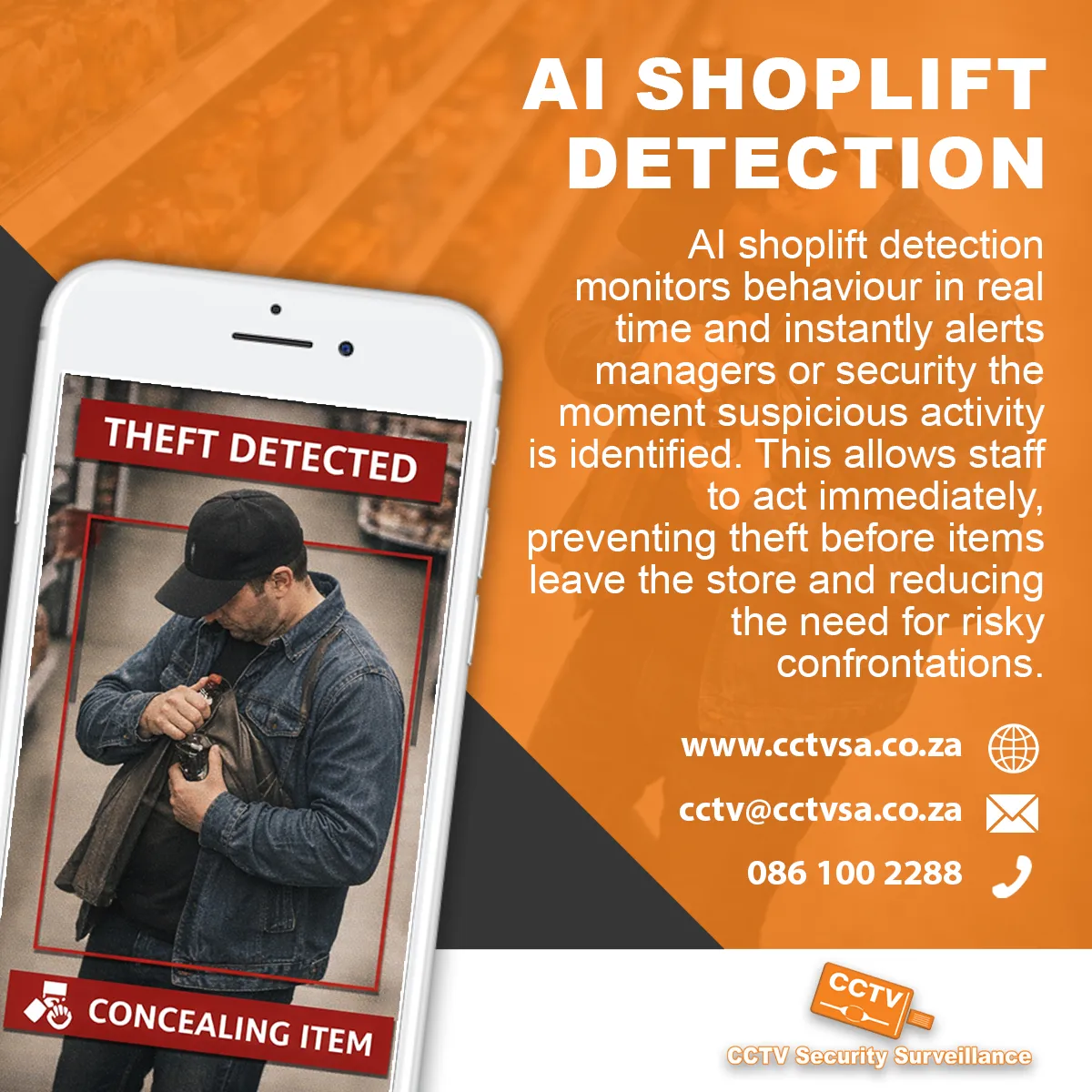
AI shoplifting detection analyses store CCTV in real time for behaviour linked to theft, such as concealing items, loitering in high-risk aisles or staging goods in blind spots. When it spots this, it sends staff an alert with a short video clip and the location, so they can step in, often just by offering help, before stock leaves the store.
It is a proactive alternative to traditional CCTV, which usually shows you a theft only after the loss. Read more about our AI shoplift detection service and our wider video analytics.
Key takeaways
- Retail shrink averaged 1.6% of sales in a major US survey, with theft behind about 65% of it.
- AI spots concealment and other theft behaviour and alerts staff with a clip and the location.
- Early, low-key engagement stops many thefts without confrontation at the exit.
Want a system designed around your site?
We design every system around your premises, risks and operations, starting with a free on-site assessment.
Request a Free Site AssessmentCall 0861 002 288Why isn't traditional CCTV enough for retailers?
Because nobody can watch dozens of screens at exactly the right moment, especially in a busy store with limited staff. Recorded footage helps afterwards, but shrinkage has already happened. Convenience stores, supermarkets, pharmacies, liquor outlets and shopping centres all face the same problem.
How does AI shoplifting detection work?
Instead of watching everything, the AI looks for specific behaviour patterns commonly linked to theft:
- concealing items in bags or clothing;
- unusual handling of products;
- loitering in high-risk aisles;
- staging goods in blind spots.
When it detects one, it alerts authorised staff on a smartphone or tablet, with a video clip and the place in the store where it happened. For a step-by-step look at the technology, see how AI shoplift detection works.
What happens when an alert comes in?
- Staff receive the alert, with a clip and the location.
- They check the clip to decide whether action is needed.
- Where appropriate, a staff member approaches and engages the customer, for example by offering assistance.
- In many cases that early engagement is enough to stop the theft, without confrontation at the exit.
Early, low-key intervention matters in South Africa, where staff safety is as important as stock protection.
What are the benefits for retailers?
| Benefit | What it means in store |
|---|---|
| Lower shrinkage | Theft is interrupted before stock leaves |
| Safer staff | Early engagement instead of confrontations at the door |
| Faster investigations | Flagged events found in seconds, not hours of footage |
| Evidence | Clips for insurance claims, internal investigations and repeat offenders |
| Uses existing cameras | Many solutions integrate with existing IP CCTV |
| Scales | From a single store to a national chain |
Which stores benefit most?
- Supermarkets and convenience stores with high footfall and small teams.
- Pharmacies and liquor outlets with high-value, easily concealed stock.
- Shopping centre stores where staff are stretched at peak times.
- Chains that want consistent loss prevention across branches. See CCTV for retail.
AI shoplift detection works best alongside other retail tools, such as till queue systems and POS integration, which tackle checkout fraud.
What should you check before installing it?
- Camera coverage: high-risk aisles and blind spots need clear views of hands and shelves.
- Who gets alerts: managers, floor staff or guards, and how quickly they can respond.
- Response procedure: train staff to engage, not confront.
- POPIA: display CCTV signage, keep footage for a defined purpose and period, and limit access. See the Information Regulator.
What does the research say?
The US National Retail Federation found average retail shrink rose to 1.6% in fiscal 2022, about US$112.1 billion in losses, with internal and external theft causing about 65% of it. (NRF (2023), National Retail Security Survey)
A randomised controlled trial across 47 retail stores found positive evidence that visible in-aisle cameras and public-view monitors reduce opportunities for theft in real store conditions. (Hayes & Downs (2011), Security Journal)
From our projects: Regional retail centre - AI shoplift detection
Pinetown, Durban, completed August 2025. AI-powered shoplift detection linked to POS data across 12 tills at a Pinetown retail centre - 24 IP cameras, real-time floor-staff alerts and 24/7 offsite monitoring.
Cameras: 24 × 4MP IP · Detection: AI shoplift · POS tills: 12 integrated
The Bottom Line
AI shoplifting detection turns cameras that record losses into a system that helps prevent them. Real-time alerts with video and location let staff step in early and safely, cutting shrinkage and investigation time.
To see AI shoplift detection in your store, request a quote or call 0861 002 288. You can also contact your nearest branch in Gauteng, KwaZulu-Natal, the Western Cape or the Eastern Cape.
Ready to put this to work on your site?
Book a free site assessment. We'll look at your premises, recommend the right system for each area and show you where it will make the biggest difference, with no obligation.
Request a Free Site AssessmentSpeak to a Security Specialist