
Part of our guideVideo Analytics →
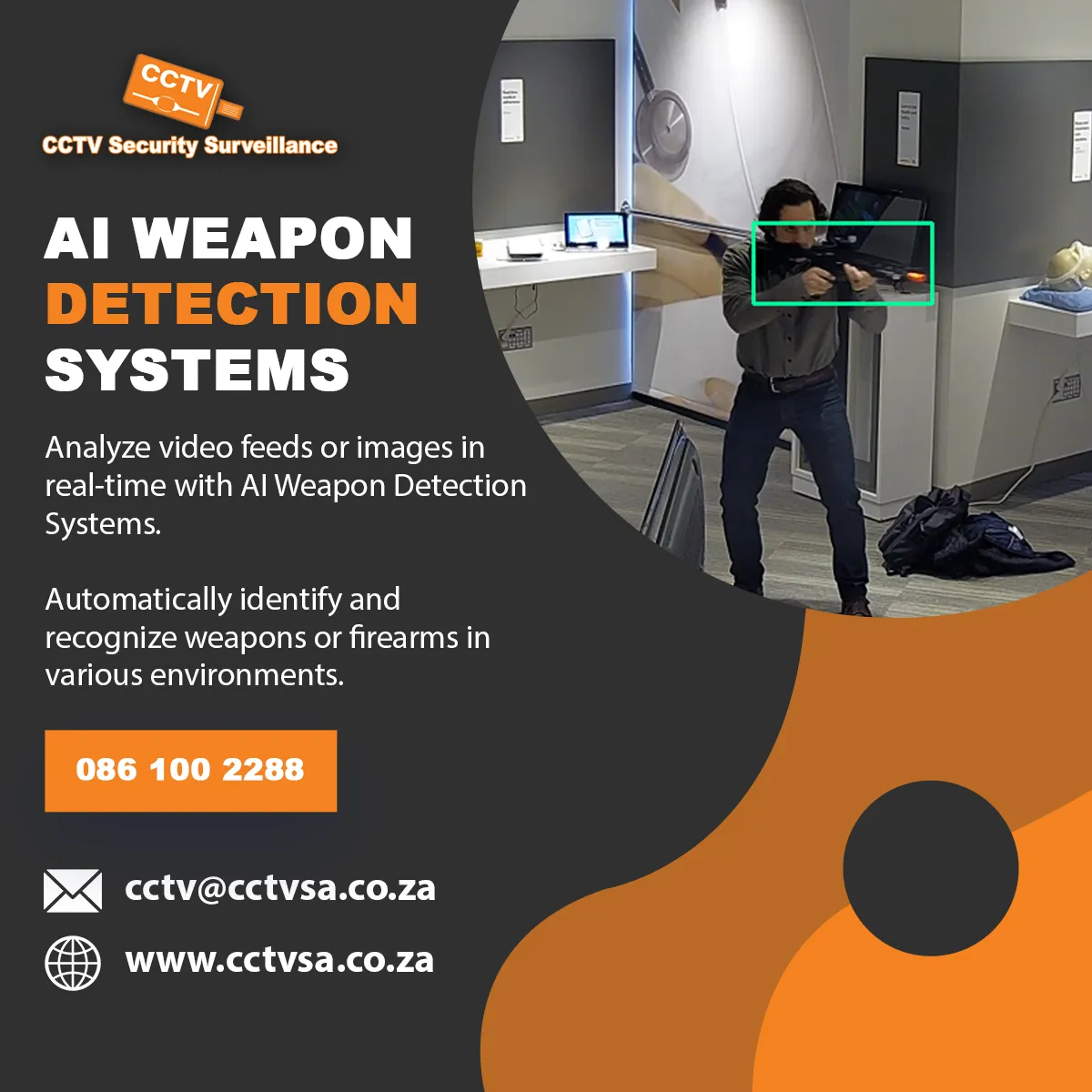
AI weapon detection uses video analytics to recognise visible weapons, such as a firearm in someone's hand, on CCTV footage and alert security staff or a control room immediately. Placed at entrances, receptions and busy areas, it shortens the time between a weapon appearing and someone responding, which can save lives.
It is one of the detections available through our AI video analytics, and works best linked to a monitored response.
Key takeaways
- AI recognises visible weapons on camera and alerts security or a control room in seconds.
- It cannot see concealed weapons; metal detectors are still needed for screening.
- Place it at entrances, receptions and counters, and verify every alert before acting.
Want a system designed around your site?
We design every system around your premises, risks and operations, starting with a free on-site assessment.
Request a Free Site AssessmentCall 0861 002 288Why is AI weapon detection needed?
Armed robberies and violent incidents unfold in seconds. A guard or operator watching many screens may not notice a weapon until it is too late. AI watches every connected camera continuously and raises an alert the moment it recognises a weapon, so:
- response is faster: security, armed response or SAPS can be alerted within seconds;
- people can be protected: staff can lock down areas or move people away;
- visible deterrence: known detection can discourage people with harmful intent.
How does it work?
- Cameras at key points send video to the AI analytics.
- The AI recognises an object that matches a weapon, such as a handgun or rifle, and marks it on the image.
- An alert with the image goes to on-site security or to a control room.
- An operator verifies the alert on live video and follows the site's response plan.
Linked to our offsite monitoring control room, every alert is checked by a trained operator before action is taken.
What are its limits?
AI weapon detection sees what the camera sees. It detects visible weapons; it cannot see a firearm hidden under clothing or in a bag. For screening concealed weapons, combine it with physical measures such as walk-through or handheld metal detectors at entry points, which we supply as part of our access control solutions. Camera angle, distance and lighting also affect accuracy, so placement matters.
Where should weapon detection cameras be placed?
| Location | Why |
|---|---|
| Entrances and exits | Catches weapons as people arrive, before they reach sensitive areas |
| Receptions and service counters | Where robberies often start |
| Cash offices and tills | High-value targets |
| Busy public areas (malls, stadiums) | Many people at risk; fast alerts matter most |
| Transport hubs | Large crowds moving through |
| Schools and campuses | Entrances and corridors |
| Sensitive facilities | Perimeters and checkpoints of critical infrastructure |
Which businesses use AI weapon detection?
- Banks and cash-handling businesses;
- Retail and shopping centres. See AI shoplift detection;
- Corporate offices and receptions;
- Schools and educational institutions;
- Critical infrastructure and government sites.
What should you check before installing it?
- Camera views: clear, well-lit views of entrances and counters at a suitable distance.
- Who gets the alert: on-site security, a control room or both, with a written response plan.
- Verification: an operator should confirm each alert before action.
- Complementary measures: metal detectors, access control barriers and panic buttons.
- Staff training: what staff should do, and not do, when an alert is raised.
What does the research say?
Actively monitored CCTV, where operators alert security or police while an incident unfolds, was associated with significant crime reductions; systems that only record showed no significant effect. (Piza et al. (2019), 40-year CCTV meta-analysis, via CrimeSolutions)
A US National Institute of Justice guide found that after only 20 minutes of watching and evaluating monitor screens, the attention of most people falls well below acceptable levels, which is why alert-driven monitoring and operator supervision matter. (Green (1999), National Institute of Justice)
CCTV combined with other measures such as access control, lighting or guarding produced larger effects than cameras alone, and the researchers advise against using CCTV as a stand-alone measure. (Piza et al. (2019), Criminology & Public Policy)
From our projects: Bank branch - vault security & customer protection
Johannesburg CBD, completed July 2025. Bank branch with vault CCTV, teller surveillance, customer area monitoring and 24/7 offsite protection.
Cameras: 42 × 4MP + thermal · Tellers: 8
The Bottom Line
AI weapon detection gives security teams precious seconds by recognising visible weapons on camera and alerting them immediately. It is most effective at entrances and counters, verified by an operator, and combined with physical screening for concealed weapons.
To plan weapon detection for your premises, request a quote or call 0861 002 288. You can also contact your nearest branch in Gauteng, KwaZulu-Natal, the Western Cape or the Eastern Cape.
Ready to put this to work on your site?
Book a free site assessment. We'll look at your premises, recommend the right system for each area and show you where it will make the biggest difference, with no obligation.
Request a Free Site AssessmentSpeak to a Security Specialist