
Part of our guideIntegrated Security →
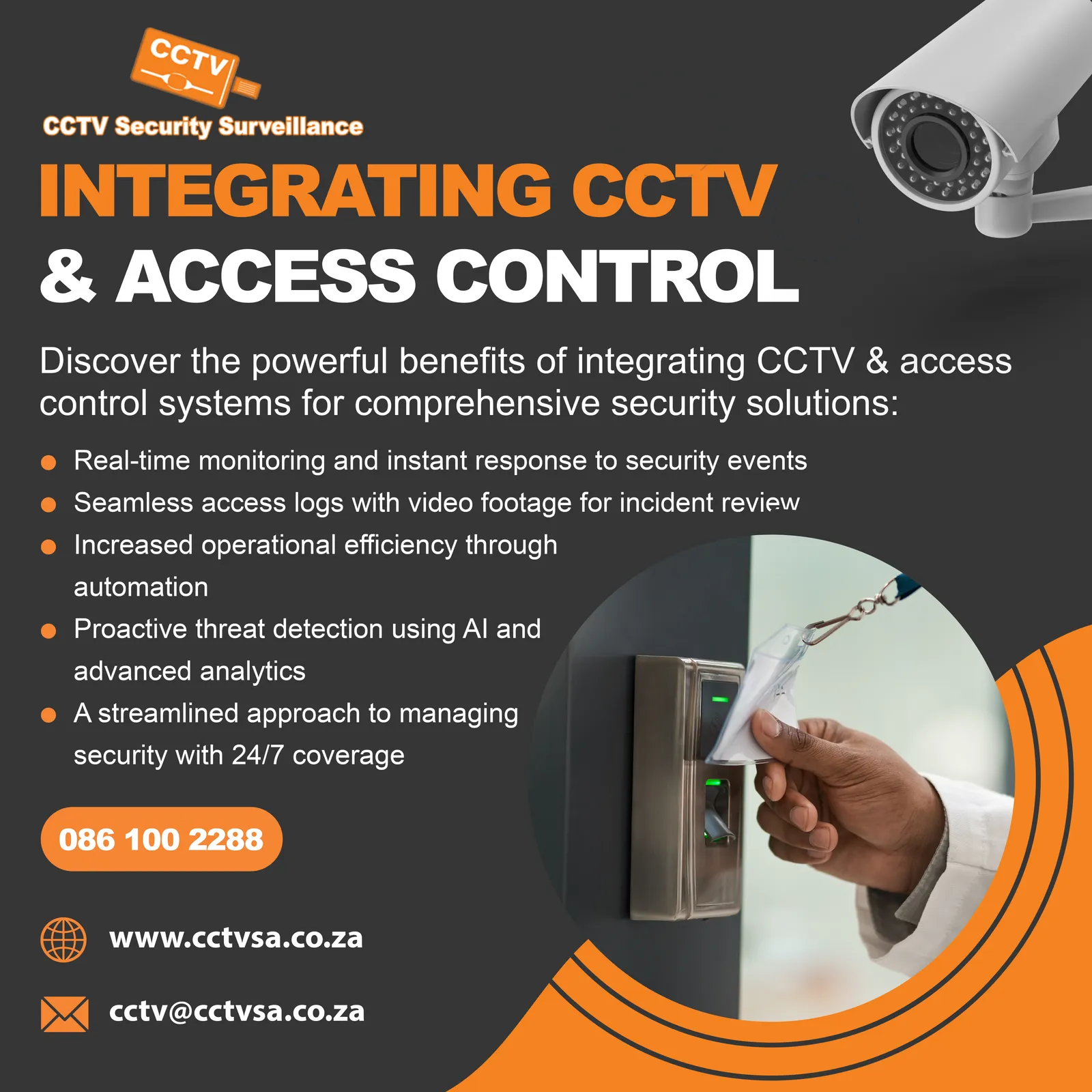
Integrating access control with CCTV links every door and gate event to video of the person or vehicle involved. Security staff can verify an alert in seconds, investigations use access logs synchronised with footage, and suspicious events, such as a forced door or a denied card, can trigger cameras and an alert to a monitored control room automatically.
On their own, each system has a blind spot. Access control records which credential opened a door, but not who was holding it. CCTV records who walked through, but not whether they were allowed to. Together they answer both questions. It is also the starting point for integrated security, where alarms, perimeter detection and monitoring join the same platform.
Key takeaways
- Access control records which card opened a door; CCTV shows who actually walked through. Integration answers both.
- Every door event can be matched to video, so investigations take seconds instead of hours.
- Research finds CCTV works best combined with other measures such as access control, not on its own.
Want a system designed around your site?
We design every system around your premises, risks and operations, starting with a free on-site assessment.
Request a Free Site AssessmentCall 0861 002 288Why integrate access control with CCTV?
Because a card log alone can be misleading. A borrowed card, a shared PIN or someone following a colleague through the door (tailgating) all look like legitimate entries in the access log. Matching each event to video shows what really happened.
The main benefits are:
- Instant verification: when a door is forced or a card is denied, cameras show the operator what is happening at that door straight away.
- Faster investigations: access logs are synchronised with footage, so you can jump from "card 214 opened the stores at 22:41" to the video of that moment.
- Fewer manual checks: the system flags exceptions automatically, so staff don't need to watch every door.
- Stronger accountability: staff know entries are recorded on video as well as in the log, which deters misuse of cards and codes.
What does an integrated system look like in practice?
| Event at the door | Access control alone | Access control with CCTV |
|---|---|---|
| Card denied at the server room | A log entry | Log entry plus live video of who tried |
| Door forced or held open | An alarm, if configured | Alarm plus camera view, sent to the control room |
| Theft investigation | A list of card numbers | Each entry matched to footage of the person |
| Vehicle at the boom gate | Card or remote opens the gate | Licence plate recognition checks the plate against a list |
| After-hours entry | Logged for the morning | Flagged immediately for verification |
How does offsite monitoring fit in?
Integration is most powerful when someone is watching. Linked to our offsite monitoring control room, access events such as a forced door or out-of-hours entry become alerts that a trained operator verifies on live video. If the threat is real, the operator follows your site's response plan, contacting on-site guards, SAPS, fire services or keyholders.
AI video analytics can add another layer, for example detecting a person loitering near a restricted entrance or tailgating through a turnstile.
Which access control platforms can be integrated?
Most professional platforms can share events with CCTV and video management software. We install and support several, including:
- Paxton Net2, popular with small and medium businesses;
- Impro Access Portal, for single sites up to large multi-site estates;
- ZKTeco Green Label biometric readers and panels.
What should you check before integrating?
- Compatibility: can your access control software and CCTV or video management system exchange events, or will one need upgrading?
- Camera placement: is there a camera with a clear view of each controlled door, gate and turnstile, including faces?
- Alert rules: which events should raise an alert (forced door, denied card, after-hours entry), and who receives it?
- Monitoring: will alerts go to on-site staff, an offsite control room, or both?
- POPIA: access logs, biometrics and video are personal information. Use them for a clear purpose, display signage and restrict who can view them. See the Information Regulator.
What does the research say?
CCTV combined with other measures such as access control, lighting or guarding produced larger effects than cameras alone, and the researchers advise against using CCTV as a stand-alone measure. (Piza et al. (2019), Criminology & Public Policy)
A meta-analysis of alley gating, which restricts access to the routes offenders use to reach properties, found modest but significant reductions in burglary, with little evidence of crime moving to nearby streets. (Sidebottom et al. (2018), Justice Quarterly)
Actively monitored CCTV, where operators alert security or police while an incident unfolds, was associated with significant crime reductions; systems that only record showed no significant effect. (Piza et al. (2019), 40-year CCTV meta-analysis, via CrimeSolutions)
From our projects: Security complex - access control & monitoring
Sandton, Johannesburg, completed October 2025. High-security commercial complex with strict access control, multiple surveillance layers and 24/7 monitoring.
Cameras: 72 × 4MP + thermal · Units: 185 · Access points: 12 controlled
The Bottom Line
Access control decides who should get in; CCTV shows who actually did. Integrated, and ideally monitored, they turn every door and gate into a verified, recorded and actionable checkpoint.
To plan an integrated access control and CCTV system, request a quote or call 0861 002 288. You can also contact your nearest branch in Gauteng, KwaZulu-Natal, the Western Cape or the Eastern Cape.
Ready to put this to work on your site?
Book a free site assessment. We'll look at your premises, recommend the right system for each area and show you where it will make the biggest difference, with no obligation.
Request a Free Site AssessmentSpeak to a Security Specialist