Part of our guideCCTV Systems →
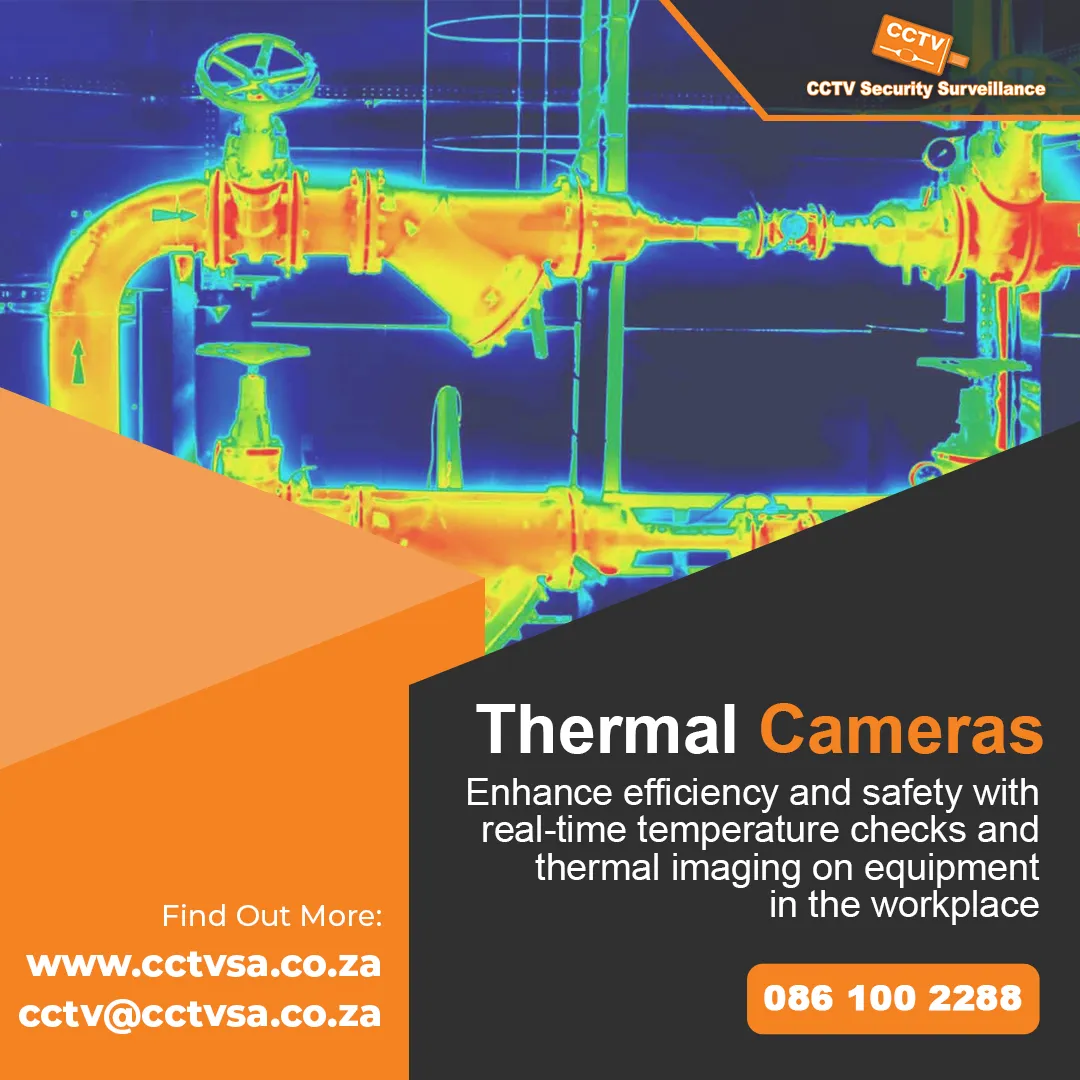
Thermal cameras monitor equipment temperature by detecting the infrared heat that machinery gives off and turning it into a temperature map. Fixed on critical equipment such as generators, boilers, switchgear, motors and bearings, they watch continuously and raise an alert when a component runs hotter than it should, so maintenance teams can act before a failure, fire or shutdown.
Thermal monitoring is one of the thermal camera applications we design into CCTV systems for industrial sites.
Key takeaways
- Electrical faults cause about 40% of industry's fire loss costs, according to insurer guidance.
- Fixed thermal cameras watch generators, boilers, switchgear and motors and alert when components run hot.
- Equipment monitoring is different from thermal security cameras and from retail heat mapping.
Want a system designed around your site?
We design every system around your premises, risks and operations, starting with a free on-site assessment.
Request a Free Site AssessmentCall 0861 002 288Why monitor equipment temperature?
Overheating is an early warning sign of many faults: loose electrical connections, overloaded circuits, worn bearings, blocked ventilation or failing components. Caught early, they are a routine repair. Missed, they can mean breakdowns, fires, injuries and costly downtime.
How do thermal cameras detect problems?
Thermal cameras capture infrared radiation and show temperature differences across a scene. Hot spots stand out clearly, even when nothing looks wrong to the eye. Fixed thermal cameras can watch equipment around the clock and alert when a set temperature threshold is exceeded.
What are the benefits of thermal equipment monitoring?
| Benefit | What it means on site |
|---|---|
| Early detection | Faults are found while they are still small and cheap to fix |
| Continuous monitoring | No gaps between manual checks, which are infrequent in large facilities |
| Safer workplaces | Fewer fires, explosions and equipment-related injuries |
| Less downtime | Repairs are planned instead of emergency shutdowns |
| Longer equipment life | Problems are fixed before they damage other components |
| Integration | Alerts can feed maintenance systems and control rooms |
Which equipment benefits most?
Generators
Businesses rely on generators through power cuts and load-shedding. Generators can overheat because of high load, poor ventilation or failing components. Thermal cameras can watch engines and electrical connections and alert operators in real time.
Boilers
Boilers are central to many industrial processes. Overheating reduces efficiency, increases fuel use and, in extreme cases, causes structural damage. Thermal cameras can show whether heat is distributed evenly and flag hot spots.
Electrical switchgear and panels
Loose or overloaded connections heat up before they fail. Thermal monitoring spots them early.
Motors, bearings and conveyors
Friction and wear show up as heat. See integrated CCTV for manufacturing for how this fits into plant monitoring.
Solar installations and server rooms
Inverters, panels and server racks can be watched for abnormal heat. See integrated automation for environmental monitoring of critical rooms.
Is this the same as thermal security cameras?
The technology is the same, but the job is different. Security thermal cameras detect people and vehicles at a perimeter. See thermal security with offsite monitoring. Equipment monitoring uses thermal cameras to measure temperature on specific machines. Retail heat mapping is different again: it analyses shopper movement, not temperature.
What should you plan before installing thermal monitoring?
- Which equipment is critical: where would a failure cost the most?
- Camera position and view: each camera needs a clear line of sight to the components that matter.
- Thresholds: what temperature should trigger an alert for each component?
- Who gets alerts: maintenance staff, a control room or both.
- Integration: whether alerts should feed your maintenance or building management system.
What does the research say?
Insurer guidance on thermographic surveys notes that about 40% of industry's fire loss expenses and roughly 20% of major fires are caused by electrical faults, and recommends infrared surveys as a fast, cost-effective preventive maintenance tool. (If P&C Insurance, Thermographic Surveys)
South Africa had load-shedding on 287 days of 2023 by mid-December, a total of 6,894 hours, against 157 days in 2022, according to EskomSePush data. (Daily News (2023), citing EskomSePush)
The ACFE's 2026 study of 2,402 occupational fraud cases found the median scheme ran 12 months before detection, and proactive data monitoring was associated with lower losses and faster detection. (ACFE (2026), Occupational Fraud 2026: A Report to the Nations)
From our projects: Pharmaceutical facility - GxP compliance & security
Durban, KZN, completed June 2025. Pharmaceutical manufacturing facility with CCTV, access control, cold storage monitoring and chain-of-custody tracking designed around GxP documentation requirements.
Cameras: 64 × 4MP + thermal
The Bottom Line
Thermal cameras give continuous, early warning of overheating equipment, turning hidden faults into planned repairs. For generators, boilers and other critical plant, they protect people, uptime and budgets.
To plan thermal equipment monitoring, request a quote or call 0861 002 288. You can also contact your nearest branch in Gauteng, KwaZulu-Natal, the Western Cape or the Eastern Cape.
Ready to put this to work on your site?
Book a free site assessment. We'll look at your premises, recommend the right system for each area and show you where it will make the biggest difference, with no obligation.
Request a Free Site AssessmentSpeak to a Security Specialist