
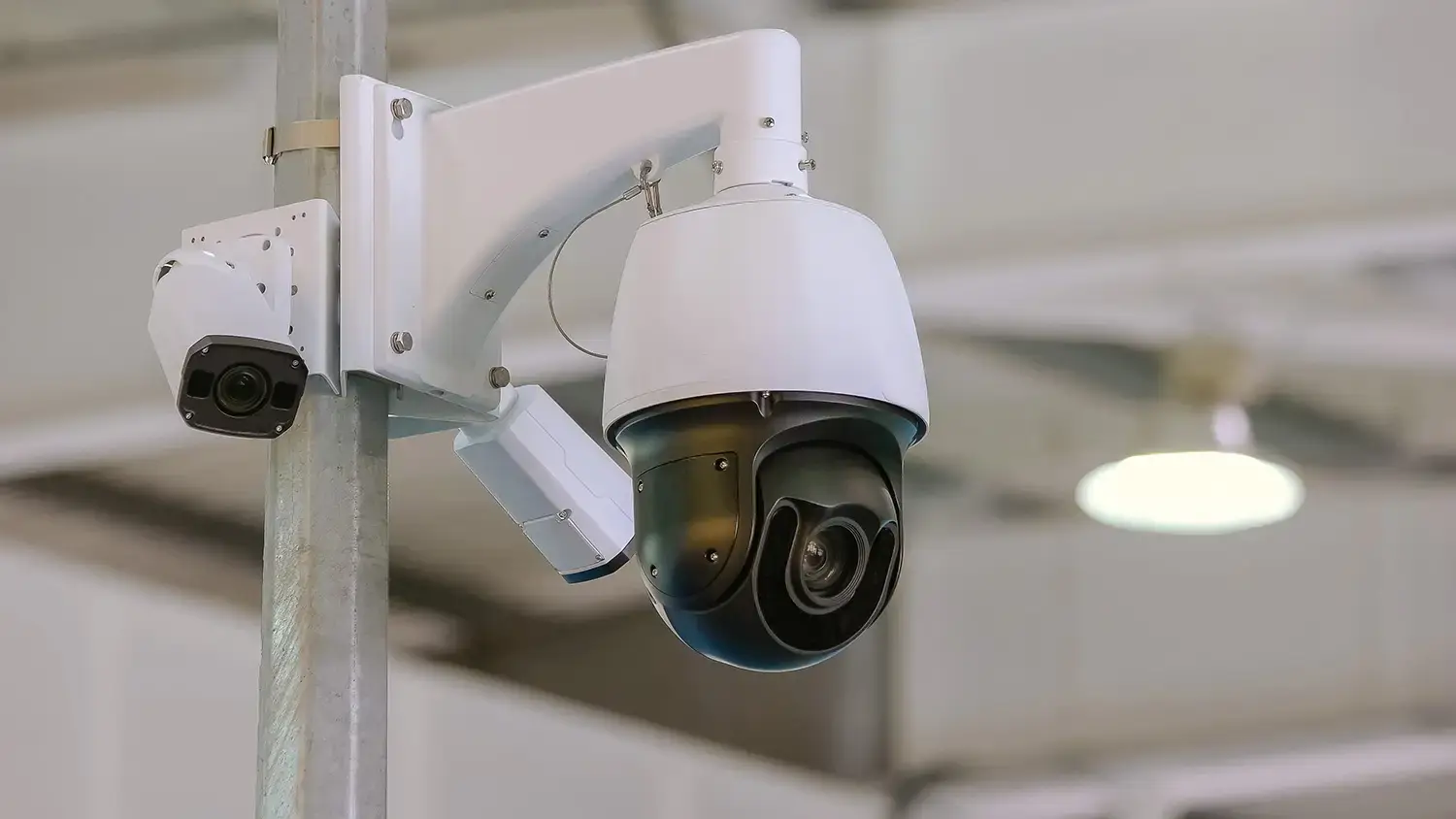
The City of Ekurhuleni has asked residents, businesses and other camera owners to register their CCTV systems by Friday, 27 November 2026, and says cameras whose ownership cannot be verified may be removed. OUTA and AfriForum dispute the city's legal authority. For businesses, the cameras stay legal to run; what matters is where they point and how footage is handled.
This briefing reads the city's notice, and the objections to it, through the lens of CCTV for business: cameras, recording, access control and the monitoring that links them on commercial and industrial sites across the East Rand.
Key numbers
- 27 November 2026: Ekurhuleni's registration deadline, announced on 12 November 2026 (City of Ekurhuleni, via Kempton Express)
- 25 February 2002: date Council approved the CCTV Street Surveillance Policy and Code of Practice the city relies on (OUTA)
- 7 working days: the time OUTA gave the city, in a letter of 18 November 2026, to name the law that allows registration and removal (OUTA)
Want a system designed around your site?
We design every system around your premises, risks and operations, starting with a free on-site assessment.
Request a Free Site AssessmentCall 0861 002 288What changed?
The City of Ekurhuleni says it is running an assessment and verification exercise of CCTV cameras installed across the metro. In a notice first reported on 12 November 2026, residents, businesses, community organisations and other stakeholders were asked to submit each camera's location, the owner's details, the person or organisation managing the cameras and the purpose of the installation by 27 November 2026. City spokesperson Zweli Dlamini said the aim is an accurate record of surveillance infrastructure, and the notice warns that cameras whose ownership cannot be established or verified may be removed after the deadline (Kempton Express). SABC News reported that the city framed the exercise as making sure systems comply with its CCTV Street Surveillance Policy and Code of Practice (SABC News).
The city's online CCTV application form asks for the applicant's name, surname, contact number, email and company name, the nearest of 17 customer care centres (from Alberton to Vosloorus), GPS coordinates and photographs of the cameras.
The Organisation Undoing Tax Abuse (OUTA) wrote to City Manager Kagiso Lerutla and Executive Mayor Nkosindiphile Xhakaza on 18 November 2026. It says it examined the city's CCTV Street Surveillance Policy and Code of Practice, approved by Council on 25 February 2002, and could not find any provision authorising compulsory registration of privately owned cameras. It adds that the policy does not appear to have been promulgated as a by-law, and that under sections 156(2) and 162 of the Constitution a municipality makes binding rules through by-laws that are published in the provincial gazette before they are enforced. OUTA advised residents to hold off on registering cameras on private property, asked the city to suspend the deadline and asked it not to remove any camera solely for not being registered (OUTA). Speaking to SABC News, OUTA's Advocate Stefanie Fick said a by-law this invasive would need public participation, and that the policy is vague and seems to be more about the city's own CCTV system than about private cameras (SABC News). The policy is published on the city's website.
AfriForum has instructed its legal team to write to the metro and says it will take further legal action unless the city withdraws the removal threat and undertakes in writing that no camera will be removed for missing the deadline (AfriForum). The Freedom Front Plus has asked for the deadline to be postponed, calling two weeks' notice unreasonable (MyBroadband, 21 November 2026). As of 24 November 2026, no reply from the city and no change to the deadline had been reported (MyBroadband, 23 November 2026).
There is a precedent nearby. The City of Johannesburg passed a by-law on privately owned CCTV cameras on 21 February 2025, requiring registration with metro police, fees and engineering sign-off. After legal challenges by OUTA and the South African Property Owners Association, council was reported to have repealed it on 2 September 2025 (OUTA).
| Question | What the city says | What the objectors say |
|---|---|---|
| Who must register? | Residents, businesses, community organisations and other stakeholders with CCTV cameras | Cameras wholly on private property should not be covered; OUTA asks the city to confirm |
| Legal basis | Cameras must comply with applicable laws; the 2002 street surveillance policy and code of practice | The policy is not a by-law and contains no power to compel registration (OUTA) |
| What is asked for | Camera location, owner, operator and purpose; the form adds contact details, company name, GPS coordinates and photos | OUTA asks what enforcement, fees or penalties are planned, and whether the public was consulted |
| What happens after 27 November | Unverified cameras may be removed | No removal without lawful authority; AfriForum threatens legal action |
| Deadline | Friday, 27 November 2026 | Suspend it (OUTA) or postpone it (FF Plus) |
What does it mean for integrated security?
This is general information, not legal advice. The dispute is about the city's power to register and remove cameras, not about whether businesses may run CCTV on their own premises.
Cameras that look onto the street
A camera that covers a road, pavement or neighbouring property is the kind the city is most interested in, and the kind any future by-law is most likely to cover. Know which of your cameras do this. Re-aiming or masking part of the view (privacy masking is built into most professional cameras and recorders) often keeps the security value while narrowing what falls outside your boundary.
Cameras mounted on municipal infrastructure
Equipment on a municipal pole, wall or road reserve is a different case. The city's notice also mentions control over municipal infrastructure, and a business has far less footing to object if its equipment sits on city property without permission. Any camera, radio link or cabinet outside your boundary should be checked first.
Footage, recording and POPIA
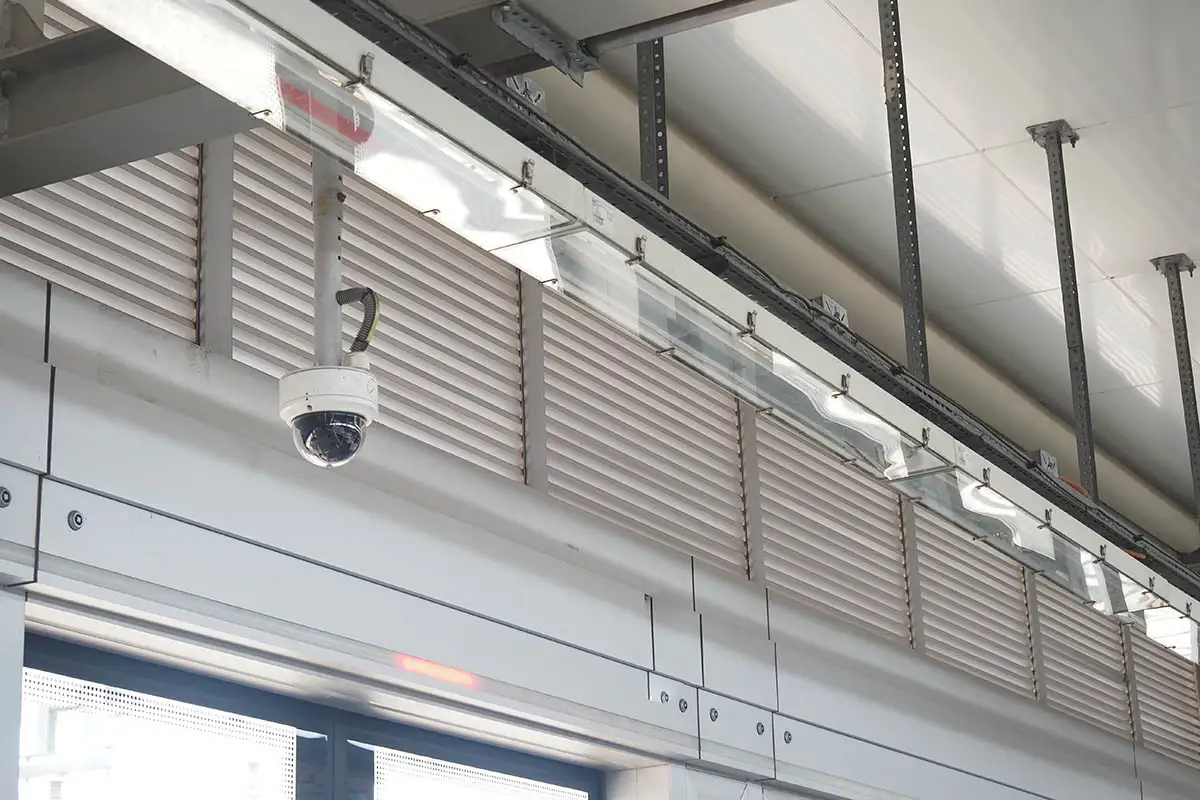
Whatever happens to the registration exercise, the Protection of Personal Information Act (POPIA) already applies to business CCTV: footage of identifiable people is personal information. Signage, a stated purpose, a retention period, restricted access to the recorder and a record of who views or exports footage are the basics. These are also what a city, an insurer or a court will ask about first. See the Information Regulator for its guidance. Where footage sits, on site or in the cloud, changes who can reach it; our guide to CCTV cloud recording and storage covers the options.
Monitored and shared cameras
Sites in business parks and estates often share camera feeds with a neighbourhood scheme or a control room. Know which feeds leave your site, who receives them and under what agreement, because the city's form asks who manages each camera. The same questions come up for CCTV in estates, where shared feeds are common.
What should businesses do now?
- Do not take cameras down. Nothing in the notice requires it, and a gap in coverage over the festive shutdown is a bigger risk than the registration dispute.
- List every camera with its location, what it views, who manages it and why it is there. You will need this whether you register or not.
- Flag the cameras that see past your boundary or sit on municipal property, and decide whether a re-aim or privacy mask makes sense.
- Decide whether to register on legal advice. OUTA has advised waiting until the city names its legal authority for cameras on private property; your own attorney or your business association can advise on your site.
- Keep a written record of any notice, visit or instruction from the city, and photographs of each camera, in case equipment is removed.
- Check your POPIA basics: signage, retention, access controls on the recorder and an export log.
- Ask your installer for an as-built camera schedule. If you need help with CCTV for business on the East Rand, our Gauteng branch in Edenvale covers Kempton Park, Boksburg, Benoni and Germiston.
Sources
- Kempton Express (The Citizen), "CCTV camera owners have until November 27 to register with Ekurhuleni", 12 November 2026
- OUTA, "OUTA urges Ekurhuleni residents to hold off on CCTV registration", 19 November 2026
- City of Ekurhuleni, CCTV Application Form
- City of Ekurhuleni, CCTV Surveillance Code of Practice (policy document)
- SABC News, "OUTA advises Ekurhuleni residents to hold off on CCTV registration", 20 November 2026
- AfriForum, "The Ekurhuleni Metro wants to take away your CCTV cameras and your safety!", 19 November 2026
- MyBroadband, "South African city threatening to remove people's CCTV cameras using Apartheid-era regulations", 21 November 2026
- MyBroadband, "South Africans warned to ignore city's orders to register CCTV cameras", 23 November 2026
- OUTA, "Lights, camera, repeal: Joburg ditches CCTV by-law", 4 September 2025
- Information Regulator (South Africa)
Running cameras on the East Rand? Request a quote or call 0861 002 288 for a camera schedule and POPIA check from our Gauteng branch in Edenvale.
Ready to put this to work on your site?
Book a free site assessment. We'll look at your premises, recommend the right system for each area and show you where it will make the biggest difference, with no obligation.
Request a Free Site AssessmentSpeak to a Security Specialist